

ETip.io
Exploring the Future of Cashless, App-Free Tipper Incentive.
-
Time
4 Weeks
-
Team
1 Product Designer
1 Project Manager
-
Role
Research
UX
-
Deliverables
User Flow
Figma Prototype
Usability-Test Reports
Designing joyful, personalized tipping for disconnected users.
During my eTip internship, I was asked to explore how eTip can make tipping not only easy, but joyful. My task was to propose digital solutions designed to increase tipper incentive for eTips’s existing tipping tool.
This case study exhibits my design process from research all the way to pitching a prototyped and tested incentive-driven concept to the eTip team.
BACKGROUND
Tipping is an inevitable part of living in the United States.
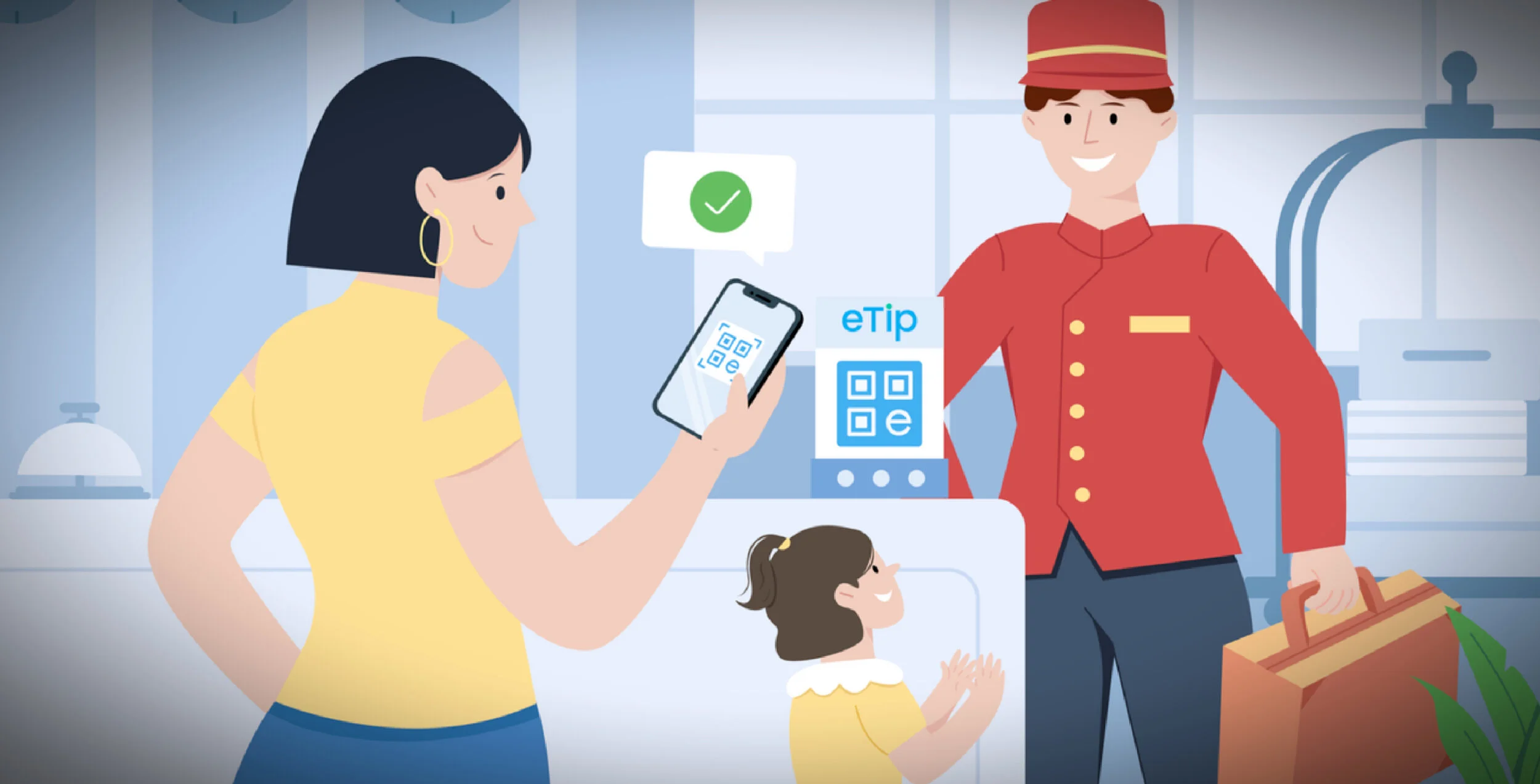
ETip’s web-based platform makes tipping easier than ever with the seamless scan of a QR code. Tippers can even rate their experiences and leave feedback for employees.
PROBLEM
Even with simple tipping tools available, tippers often still lack motivation to tip.
Convenience is not always enough to make paying gratuity a pleasant experience.
OPPORTUNITY
How might we create a unique way to make tips feel more personal and high impact?
SOLUTION
The Golden Buzzer Concept
A unique, additional rating feature that enables guests to recognize and express gratitude for exemplary service and to support an employee’s professional upward mobility.
Uplift Employees.
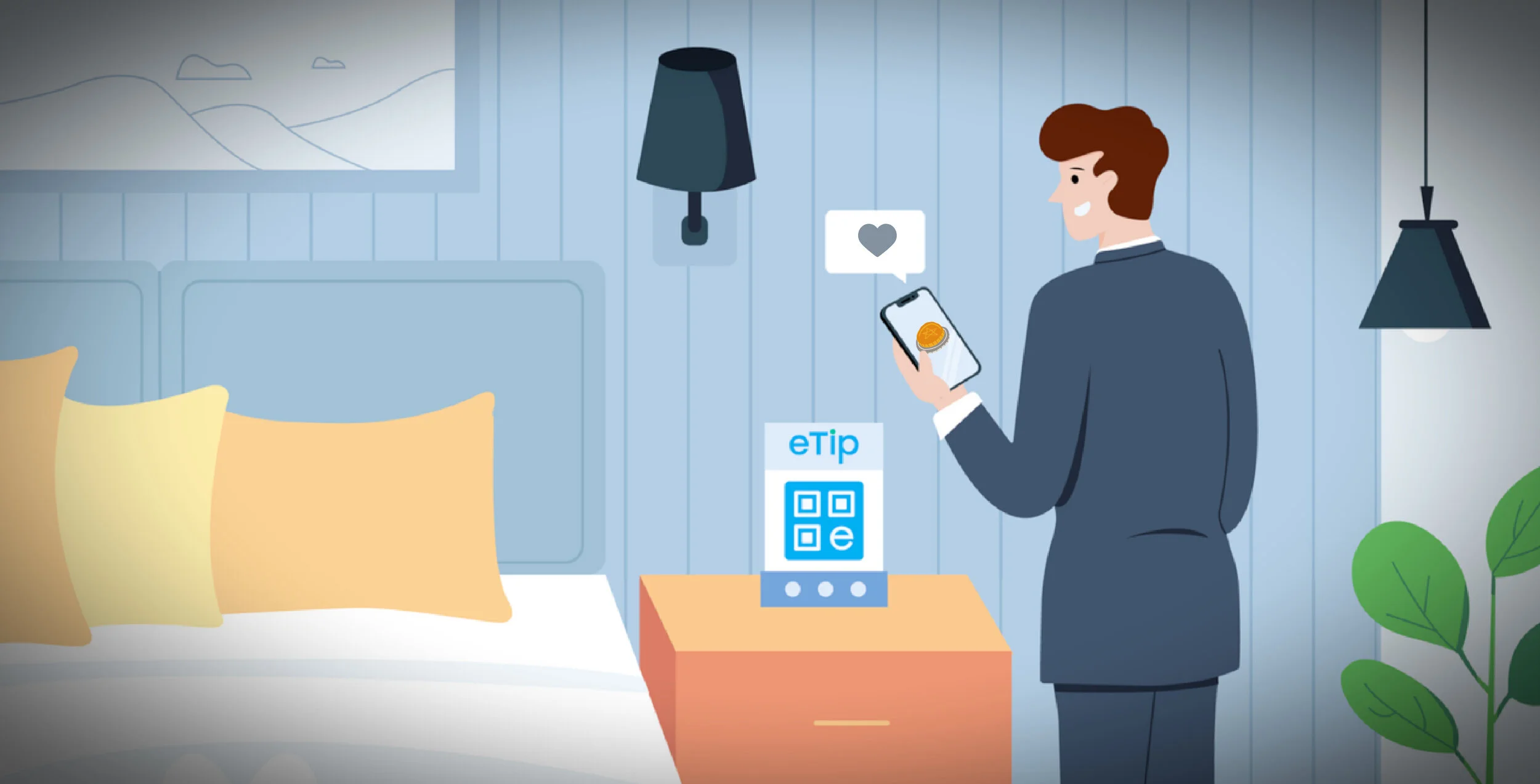
Tippers who rate an employee five stars are asked if they would like to use their golden buzzer. The golden buzzer might take the form of a sixth star, a call bell, or anything that is thematically relevant to the respective industry.
When activated, the golden buzzer notifies an employee’s manager. This helps a company’s higher level management recognize staff who deserve future promotions.
.
Share Gold.
Users are allotted a finite amount of golden buzzers within a tipping period to ensure that the feature is only being used when truly deserved.
For example, a tipper might only receive one golden buzzer for every 10 times they use eTip; this simultaneously encourages users to tip more frequently.
Give Compliments.
Tippers who choose to use their golden buzzer can add a customized compliment explaining the reason for their unique support.
Compliments include both pre-written and free form options for the tippler’s convenience.
What People Are Saying
“Satisfying and playful. I wish my customers had this when I was a waiter.”
USER
“A tip can only say so much; I love how the golden buzzer totally shifts that.“
USER
Tipper Incentive for eTip
Elevating gratitude by elevating others.

PROCESS
RESEARCH
Background
In a digital whirlpool of frustration and impatience, how can eTip reframe tipping from a stressful, obligatory responsibility into one that is meaningful and exciting?
My research combined multi-media exploration as well as user interviews. I learned more about how politicized and multi-faceted tipping culture is, as well as how tipping has bled into the way employees and customers perceive work.
I also drew upon information from economies that do not typically engage in tipping. For example, in Japan, hospitality staff embrace the custom of omotonashi—taking pride in the work one does without expecting anything in return.
RESEARCH
User Interviews
Once I gathered a list of themes to further explore, I crafted a focused Interview Guide and selected 50+ interviewees of different demographics.
My questions aimed to uncover which habits are linked to tipping, whether the perception of tipping varies between different positionalities, and how cultural influences or personal values impact the way individuals tip in 2021.
User interviews proved to be a powerful tool in helping me identify specific holes in tipper incentive.
DEFINE
Empathy Map
I organized my interview insights into three different categories: (1) notes of interest, (2) themes with opportunity, and (3) ideas to revisit.
I sorted all interviewees into seven different user types in order to create high-density Empathy Maps.
Here is an example of one of my empathy maps:
Key Insights

Pain Points.
“Even though [tipping] is quick, there’s a ton of pressure there. Is this [tip] too much? Too little? Will it even matter?”
FINANCIAL LIMITATIONS.
Tippers who aren't able to tip generously often feel that their contributions do not significantly impact the lives of staff.
TIPPING IS OVERWHELMING.
Several interviewees expressed feeling overwhelmed or stressed by how demanding and obligatory tipping can feel. Themes.
“I mean…we have to tip. It’s like when your mom forces you to write a thank you card to your teacher. You’re thankful, but, you know.”
TIPPING FEELS INSINCERE.
Interviewees felt disconnected from their tips, explaining that tipping generally lacks any sense of personalization and can feel performative or robotic. 

Goals.
“I tip somebody everyday. You’d think that by now I’d feel more comfortable doing it.”
HEALTHY TIPPING FEELS IMPOSSIBLE.
Tippers wanted to have a healthier relationship with tipping, but did not know where to begin or if it was even possible. DEFINE
User Personas, Journey Map
From my user interviews, I created two trait-based User Personas, representative of different kinds of hotel guests.
My first persona, Albert, represented the young professional sector of my interviewees:
After my project manager reviewed my personas, he felt we should move forward with Albert, who best encompassed eTip’s target market.
I then crafted a Journey Map detailing a business professional’s typical hotel stay, identifying experiences with opportunity for improvement:
DEFINE
Needs
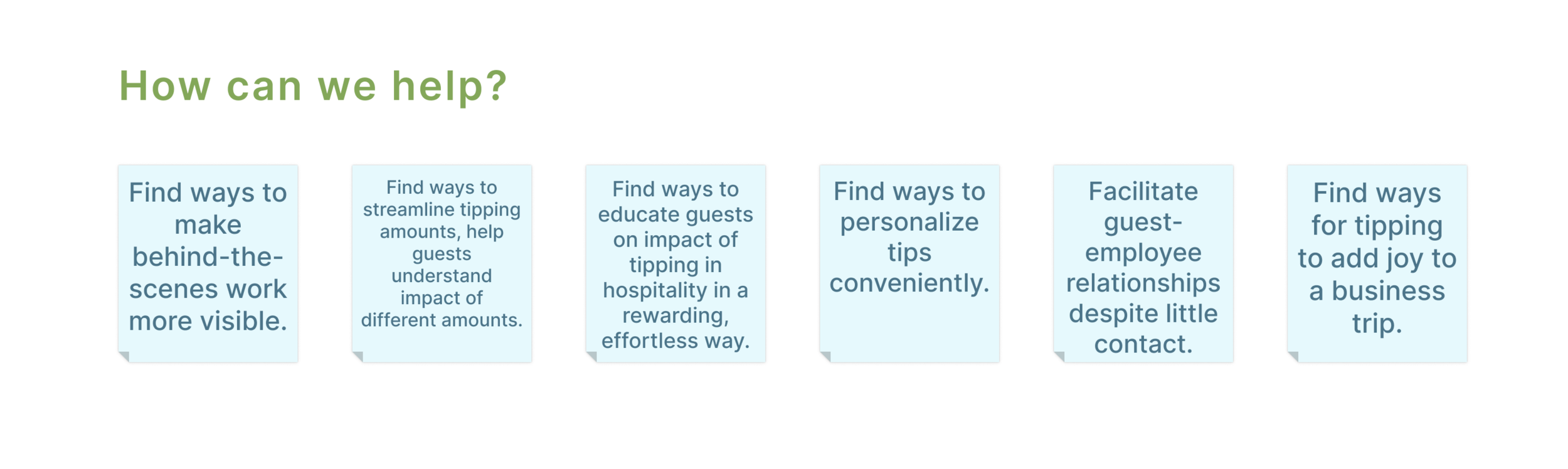
In order to narrow my focus within the multi-dimensional web of tipper needs, I interpreted my research into an array of ‘How Might We’ questions.
I reviewed my assortment of design paths with my project manager, and selected a topic trajectory in order to formulate a POV Statement.
DEFINE
POV Statement
Tippers need a way to customize or personalize tips in order to feel more connected to and empowered
by tipping.
IDEATE
Goals
Seamlessly Customizable
How might we enable a sense of self-expression in an act of gratitude?
Emulate Gift-Giving
How might we translate the most rewarding parts of gift-giving into the tipping experience?
IDEATE
Iceberg Canvas, Critical Alphabet
Because my task was inherently research focused, I wanted to make sure that I was mindful of blindspots on both micro and macro levels.
I first used the Iceberg Canvas Exercise (design framework by Will Anderson and Karwai Ng for re-evaluating propositions) to help explore the individual, societal, and environmental implications of eTip’s services on a broader level.
Afterwards, I used the Critical Alphabet (Lesley-Ann Noel’s tool for reflection via critical theory) in order to review how theory such as intersectionality, GroupThink, and different values can impact the use of eTip.
IDEATE
Brainstorming,
Low Fidelity Screens
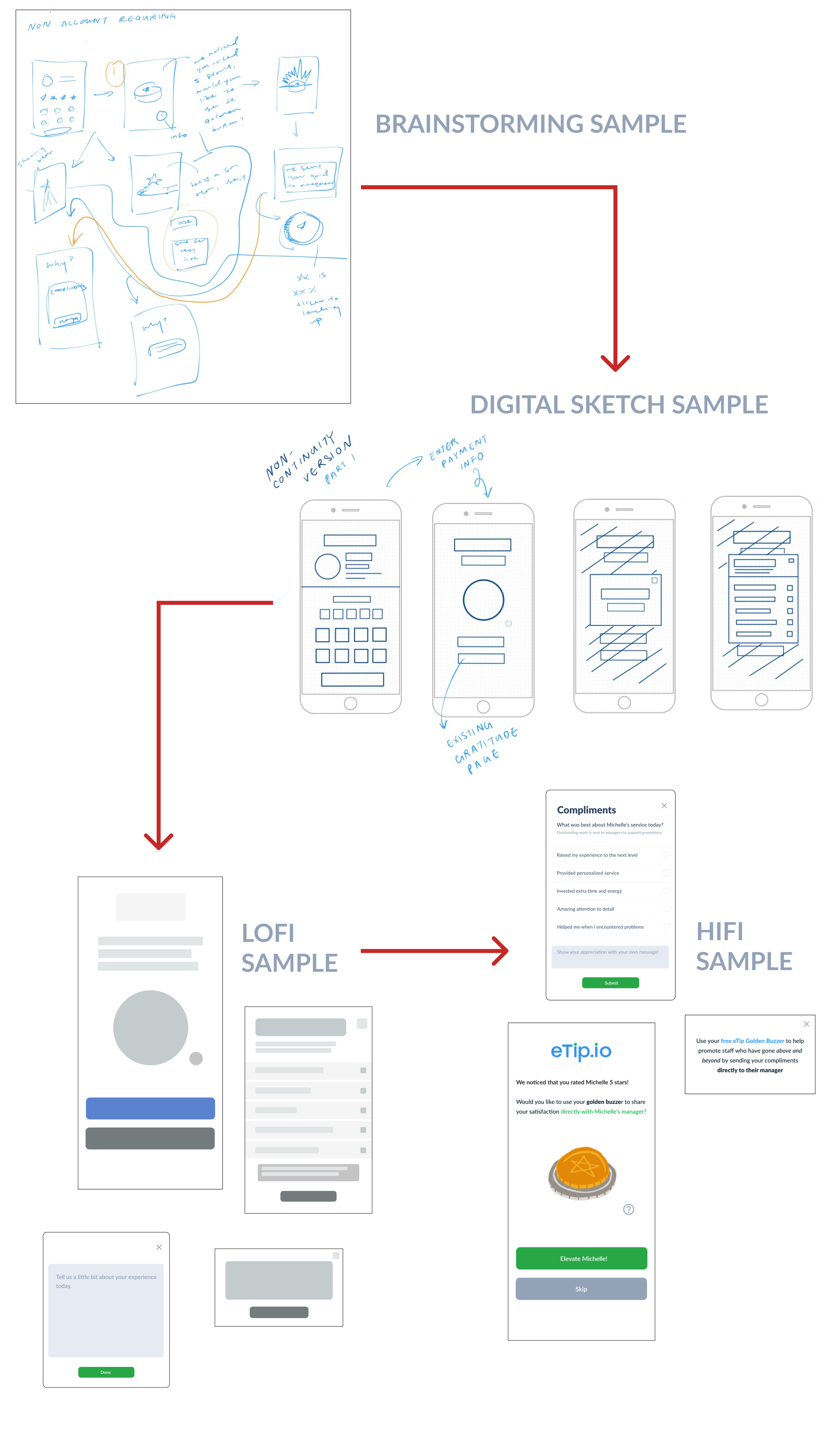
I first brainstormed 30+ ideas utilizing the design thinking Crazy 8’s method.
I then pitched my top five ideas to my previous interviewees for further insights and feedback. I combined the features that resonated with users most into the rough initial concept of the golden buzzer.
In order to transform the idea into something testable, I created several iterations of digital Wireframe Sketches, Low Fidelity Wireframes, and eventually High Fidelity Screens.
PROTOTYPE & TEST
Usability Insights
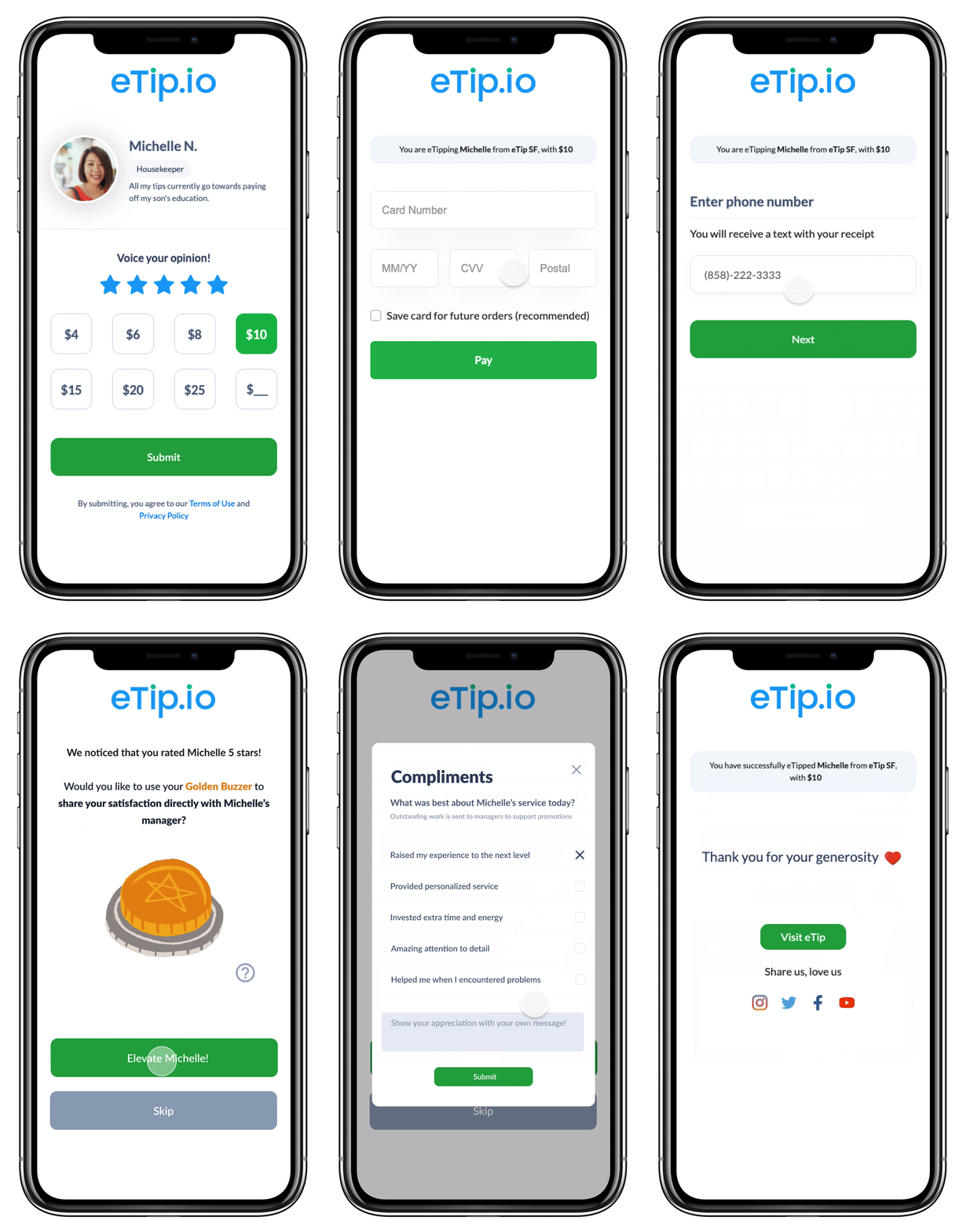
I prepared a focused User Testing Guide and tested the prototype with a combination of former interviewees and new users. I first asked users to use eTip without any direction, then guided them through the process asking for specific feedback regarding different aspects of the golden buzzer.
I was thrilled to discover how enthusiastic users were about the added feature. I recorded all user feedback, and redesigned multiple screens accordingly.
For example, I increased the text size on the compliment pop-up screen, enabled multi-compliment selection, enabled a hybrid of checkbox-text compliments, altered confusing colors, and rephrased weak copy.
REFLECT
NEXT STEPS
Examples of user suggestions moving forward include that we add icons to each pre-written compliment in to help more quickly discern option semantics. Users also suggested rethinking the language behind “Elevate [employee name]”. For example, “Give [employee name] Gold”.
REFLECT
OTHER POTENTIAL SOLUTIONS
Due to the nature of this task, I also recorded seven additional potential solutions from my research for future exploration:
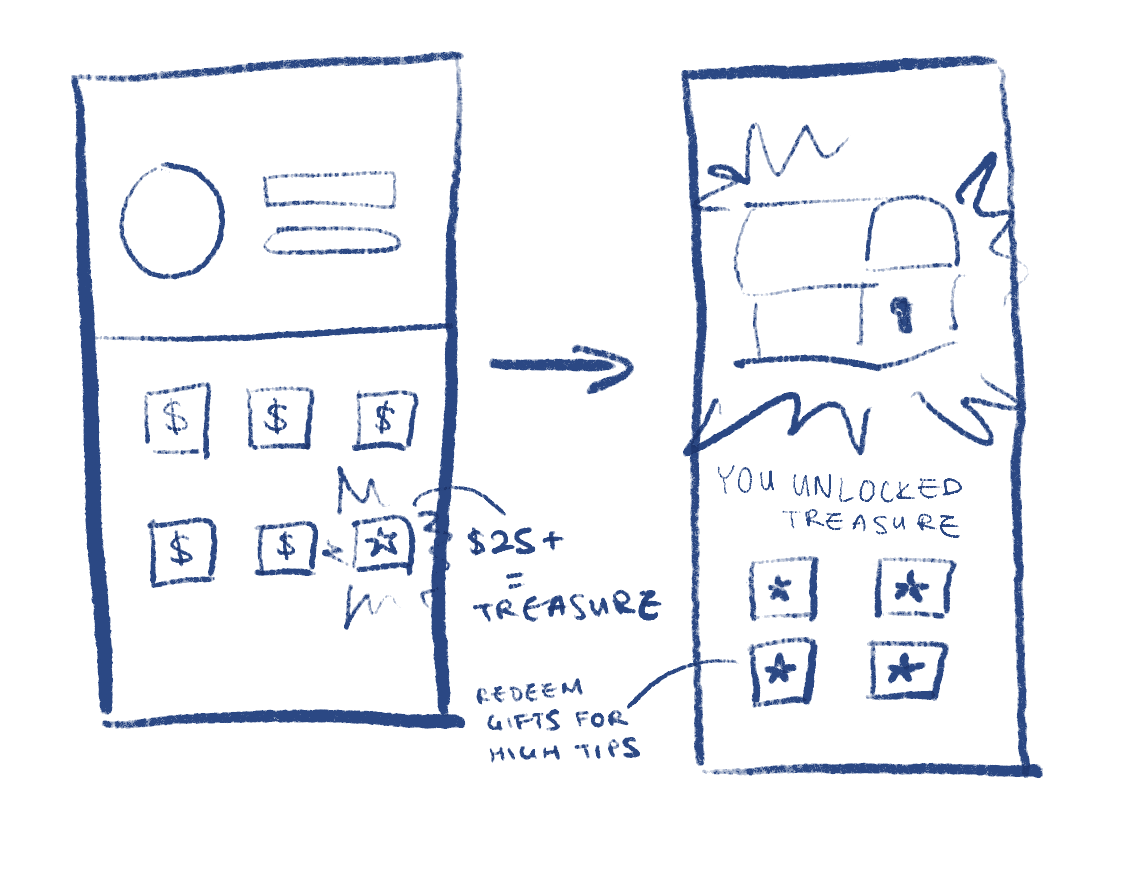
TREASURE HUNT. Users can ‘hunt for treasure’ by repeatedly choosing to tip a particularly high tip amount. For example, if a user tips $25, an irregularly high tip, five times, then they unlock a relatively quality/luxury gift voucher or free item that they can redeem from a service which resonates with their personal interests. This bridges the link between being generous and receiving something in return for being kind.
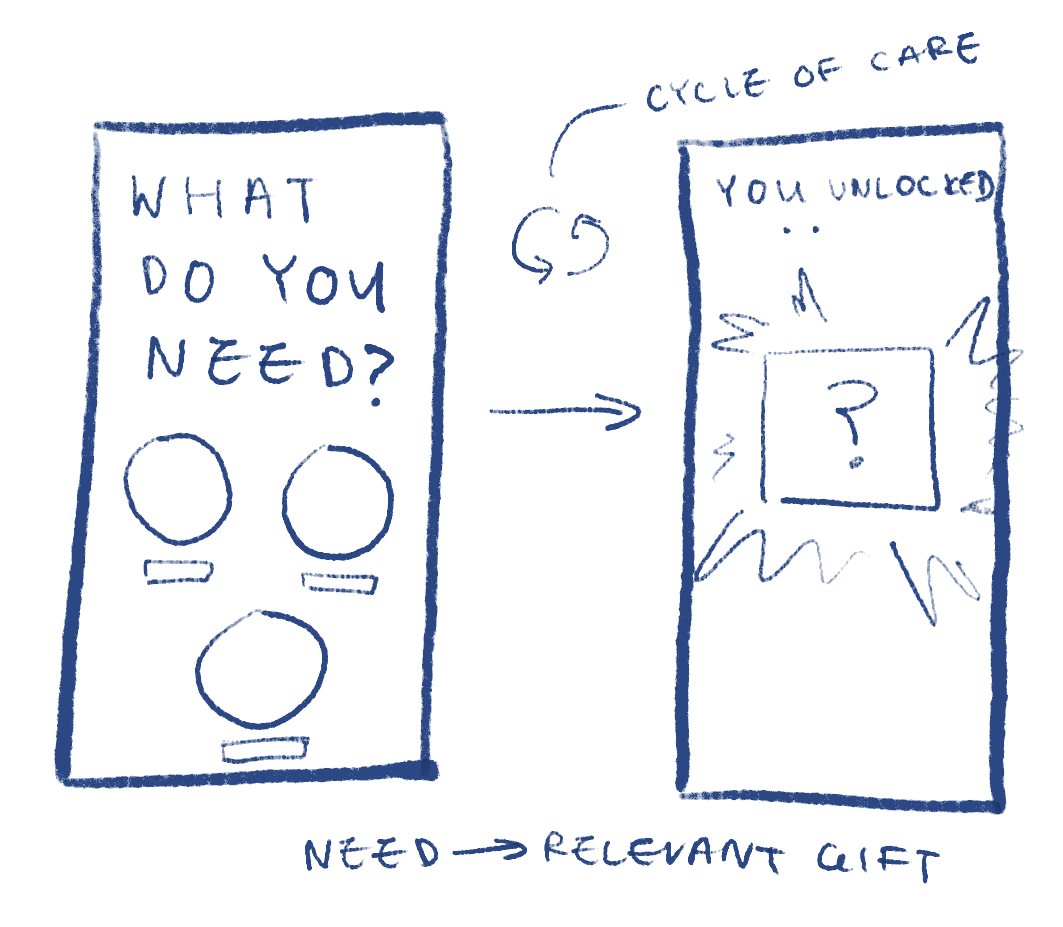
MYSTERY NEED-BASED REWARDS. Users collect ‘gratitude points’ each time they tip. After a user collects a certain amount of points, they unlock a mystery item. A pop-up appears asking the user what they are in need of at that moment (i.e. “a pick me up”, “something sweet”, “some comfort”, etc.). Based on the ‘need’ they select, the user receives a simple voucher that corresponds with their need. For example, a candle voucher for comfort or a dessert voucher for something sweet. Not only do users feel rewarded when they tip, but they also feel that their reward is curated for their current mental state, symbolizing a gesture of returned kindness from the world around them.
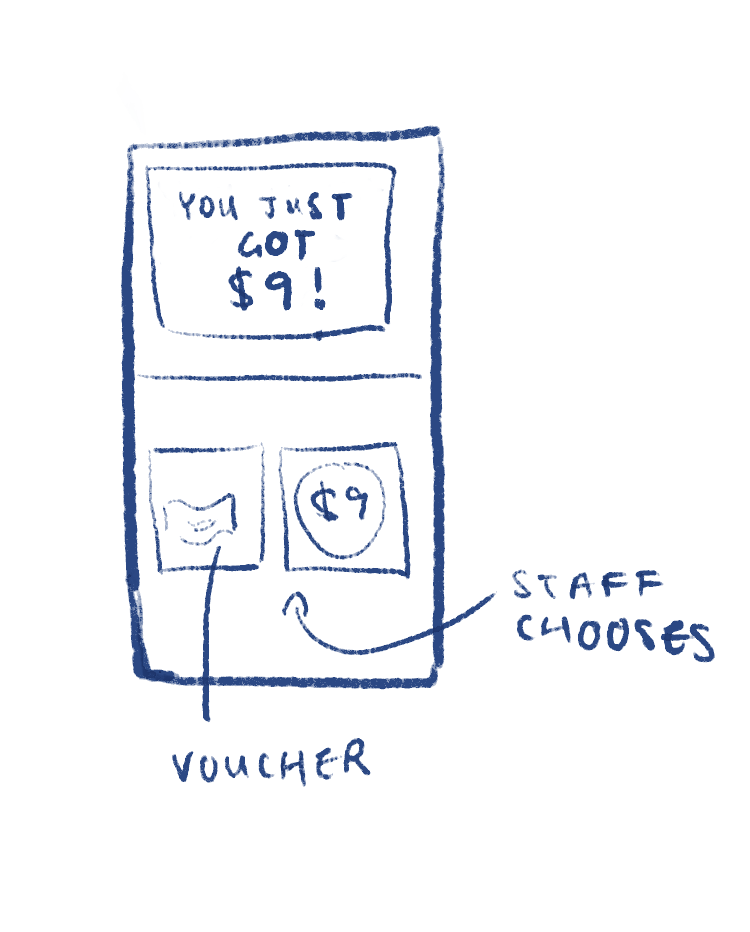
GIFT MODE V2. Users can still choose to view tips in either dollar amounts or in the form of gift icons. However, the icons correspond to gift vouchers that employees have the option of redeeming instead of merely receiving the dollar amount. Additionally, perhaps there is an option to add a voucher to a user’s initial tip if they are particularly satisfied by an employee’s service.
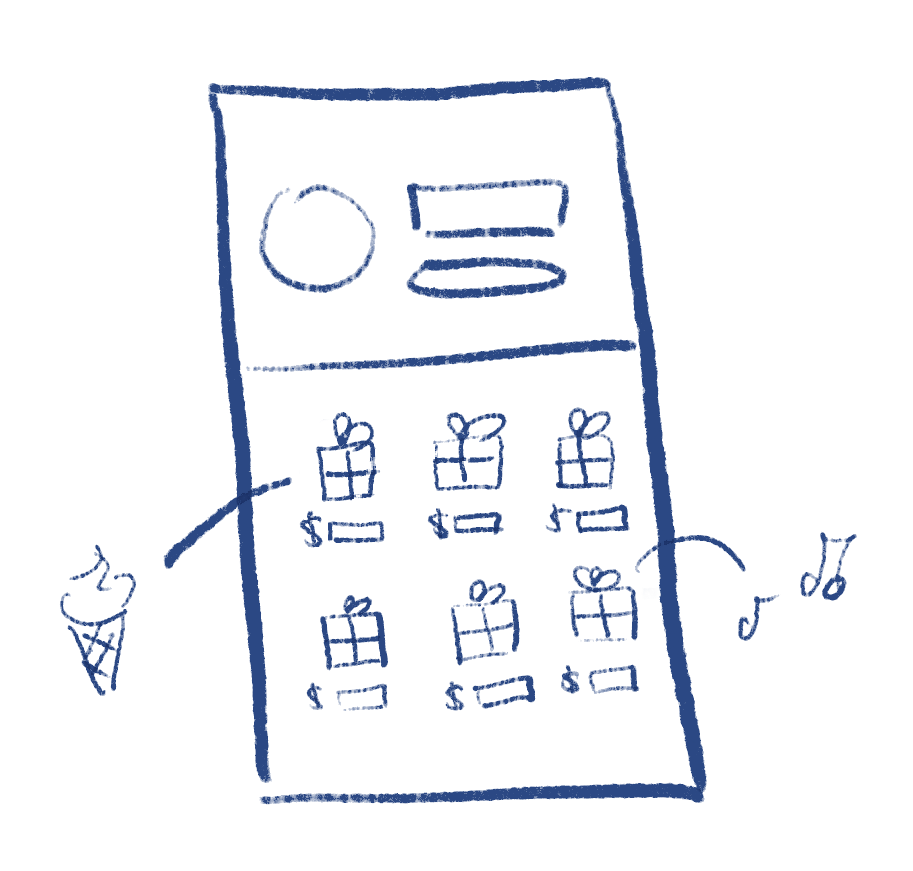
GIFT MODE V1. Users can choose to either view tips in dollar amounts, or as the icon of an item or gift that is worth the same monetary amount. For example, instead of simply seeing the “$5” tip option, the user can activate gift mode and see an ice cream icon where the “$5” would usually be. While the employee will still receive the monetary value of the tipped icon, the user is able to make a more tangible mental connection between what their tips are able to buy a staff member.
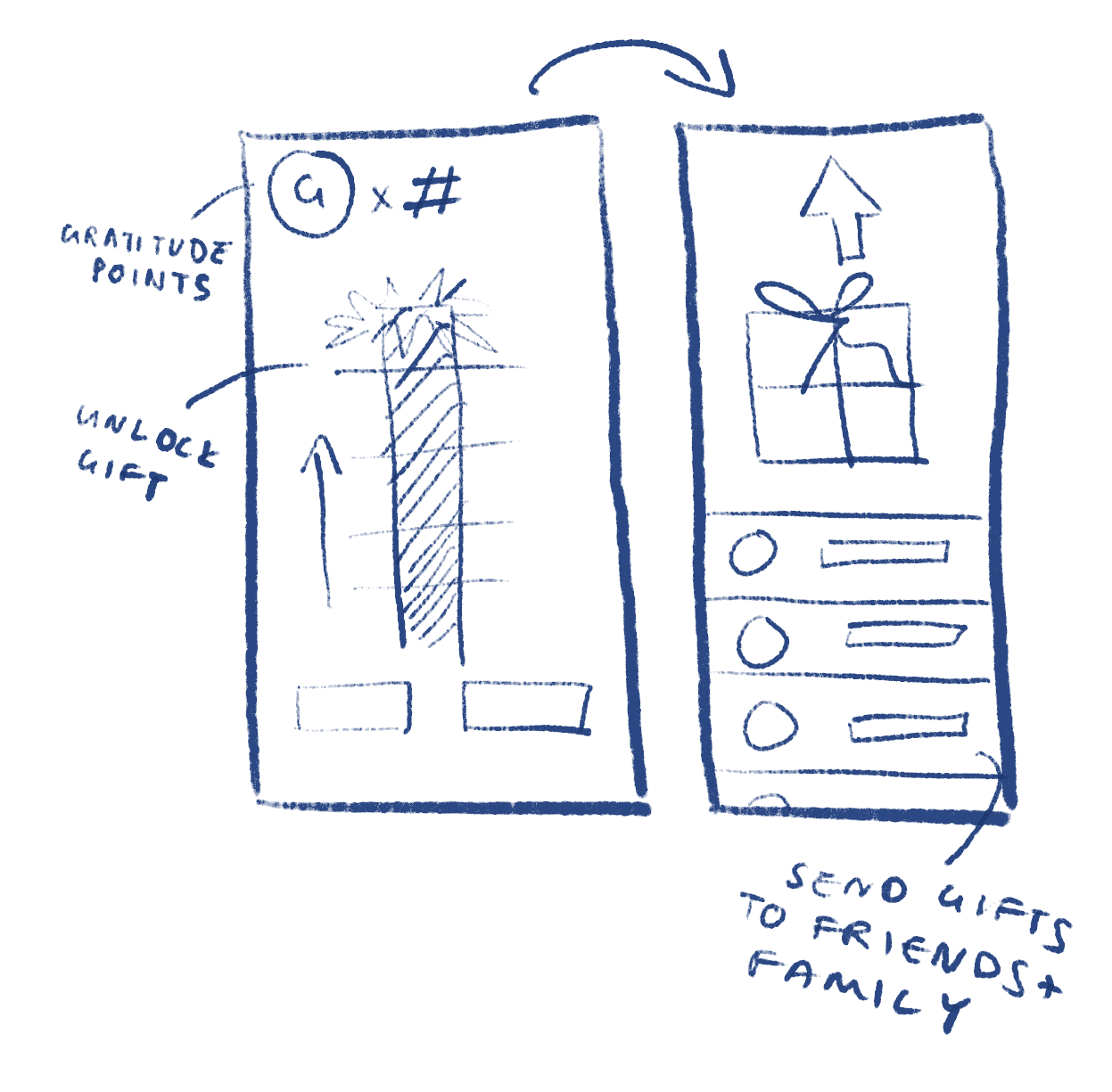
GRATITUDE POINTS. Users accumulate a certain amount of ‘gratitude points’ each time they tip. When they collect enough points, they are able to redeem a simple digital gift voucher and automatically forward that voucher to friends or family. The idea is that by being generous with your tipping, you are able to treat those you love to something small for free. A feeling of selflessness for a feeling of selflessness.
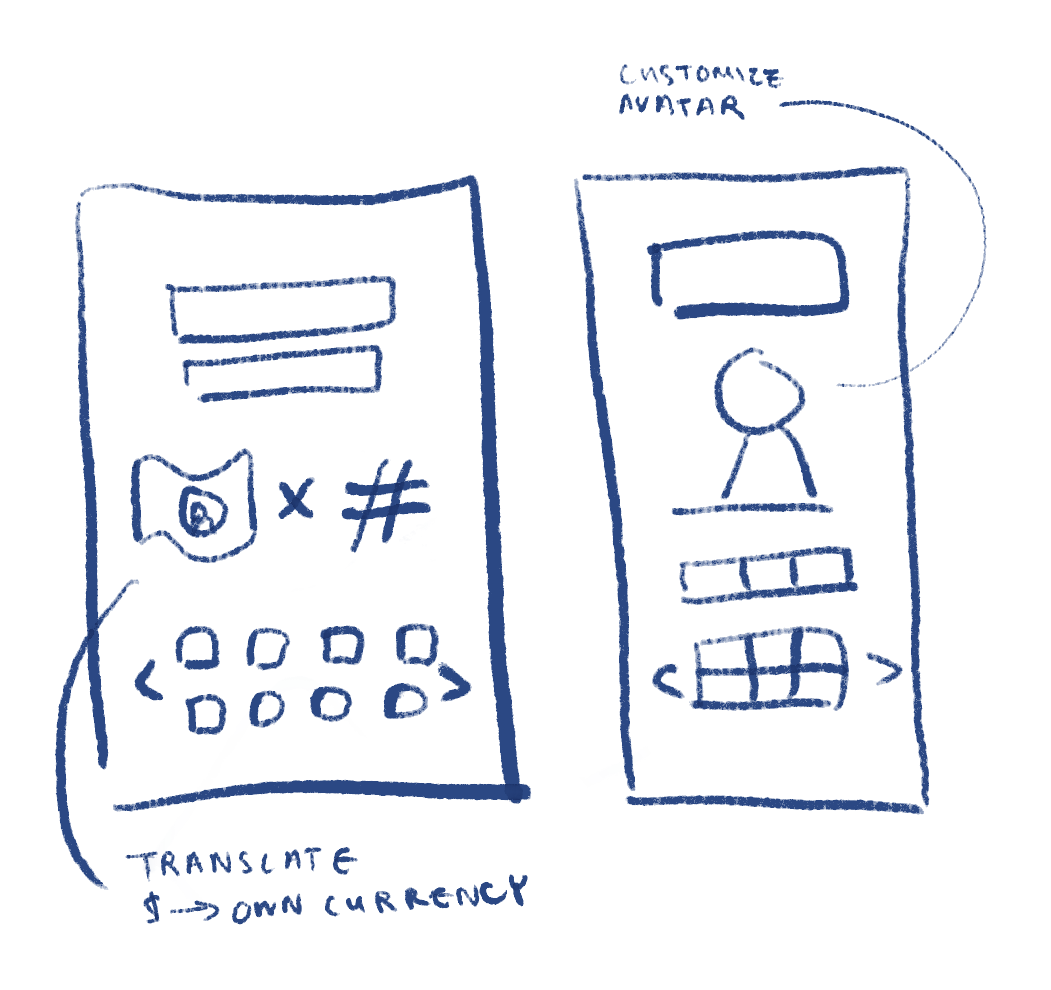
CUSTOMIZABLE CURRENCY. Users are able to alter the aesthetic appearance and name of the currency they use to tip (i.e., ‘Nicholas Dollars’), fostering a sense of personal generosity via giving/sharing virtual items which are connected to them. Users can choose how much each dollar in their currency is worth.
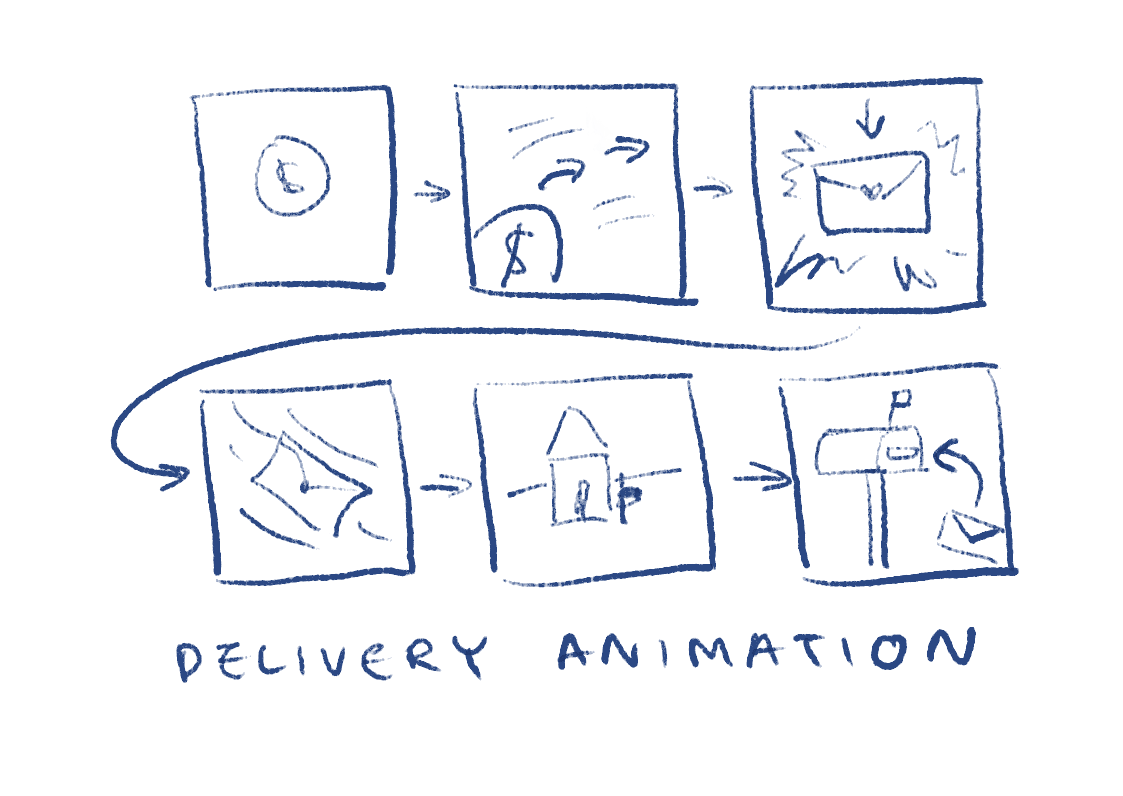
DIGITAL ENVELOPE ANIMATION. After users successfully tip a given amount, they will see a simple animated representation of their tip slipping into a virtual envelope and soaring into another simple illustration of an employee’s mailbox. This will help users humanize staff that they might otherwise not interact with by reminding users that tips do not only go into employee’s pockets, but also to their homes and families.
Thanks for reading! Still curious?

