
Master of
Design Technology
Technical fluency for creative empathy.
Great production demands technical literacy.
In 2024, I completed a Master of Design Technology in Animation, Interactive Technology, Video Graphics, and Special Effects at the Miramar Creative Centre in Wellington, graduating with distinction. I completed this degree to become a producer fluent in both storytelling and the infrastructure that brings it to life. Training as a technical artist allowed me to work alongside sound designers, performers, writers, and technical artists across the full production pipeline. I learned to identify problems both through my own viewport and through close collaboration with specialists in each discipline, developing structured approaches to troubleshooting and creative problem solving. The experience deepened my respect for the craft of VFX and animation and strengthened my ability to lead with technical empathy. While I remain a producer at heart, this immersion fused with my background in product and project management to make me a more informed, capable, and artist-supportive leader.
ROLE
Technical CG Artist
Production Management, Animation, Interactive Technology, VFX, Procedural Systems & Tooling, Node-Based Workflows, Motion Capture
SKILLS
Houdini, Unreal Engine, Motive,
DaVinci Resolve, Shotgrid, Notion
TOOLS
COURSE BREAKDOWN
The Master of Design Technology was an intensive, production-focused program centered on animation, VFX, and interactive systems. My coursework emphasized hands-on technical execution, problem solving, and real pipeline fluency.
-
Working in Houdini FX introduced me to procedural pipelines and a systems-based approach to creative problem solving. I learned how to debug complex setups, read error logs, and build node networks for procedural modeling, rigging, and materials, while also creating HDAs and writing VEX code. I also explored lighting and rendering workflows in Solaris. The course emphasized pushing projects through the full pipeline early to surface problems quickly and iterate intelligently. This experience deepened my technical literacy and helps me support artists more effectively as a producer, especially when navigating complex VFX pipelines.
-
This course focused on performance capture workflows at the Miramar Creative Centre. I learned how to work directly with performers, helping them suit up in motion capture gear and guiding performances so that movement reads clearly without feeling muted in the final animation. We captured both individual and multi-performer performances using rigid body setups and virtual camera (V-Cam) technology. The captured data was then cleaned in Motive and further edited in Houdini and Unreal. This experience strengthened my understanding of performance-driven pipelines and made me highly comfortable moving data between different software environments.
-
In this course I built real-time scenes and cinematic environments using Unreal Engine. I assembled full sets, programmed cameras, and rendered sequences while learning the fundamentals of optimization and real-time production workflows. I also worked extensively with MetaHumans, exploring how lighting, animation, and material adjustments affect believability in digital characters, including details such as tuning skin specularity across different skin tones. The experience strengthened my understanding of real-time pipelines and how technical and artistic choices come together to create convincing virtual worlds.
-
In this course I focused on visual storytelling through layout, lighting, and camera. I developed a strong appreciation for composition and how small adjustments to framing, lighting, and camera settings can dramatically shape the mood of a scene. I also discovered a particular affinity for editing and post-production workflows, refining pacing and bringing projects together in their final cinematic form. This experience strengthened my eye for visual clarity and reinforced my belief that thoughtful final execution can make a significant difference in how a story is delivered.
PROJECTS & TECHNICAL STUDIES
ONE | Knight Duty
A procedural character study on visibility and transformation
Motion Capture Direction · Data Cleanup & Editing · Cinematic Camera Design · Procedural Animation Workflow · Node-Based Systems
-
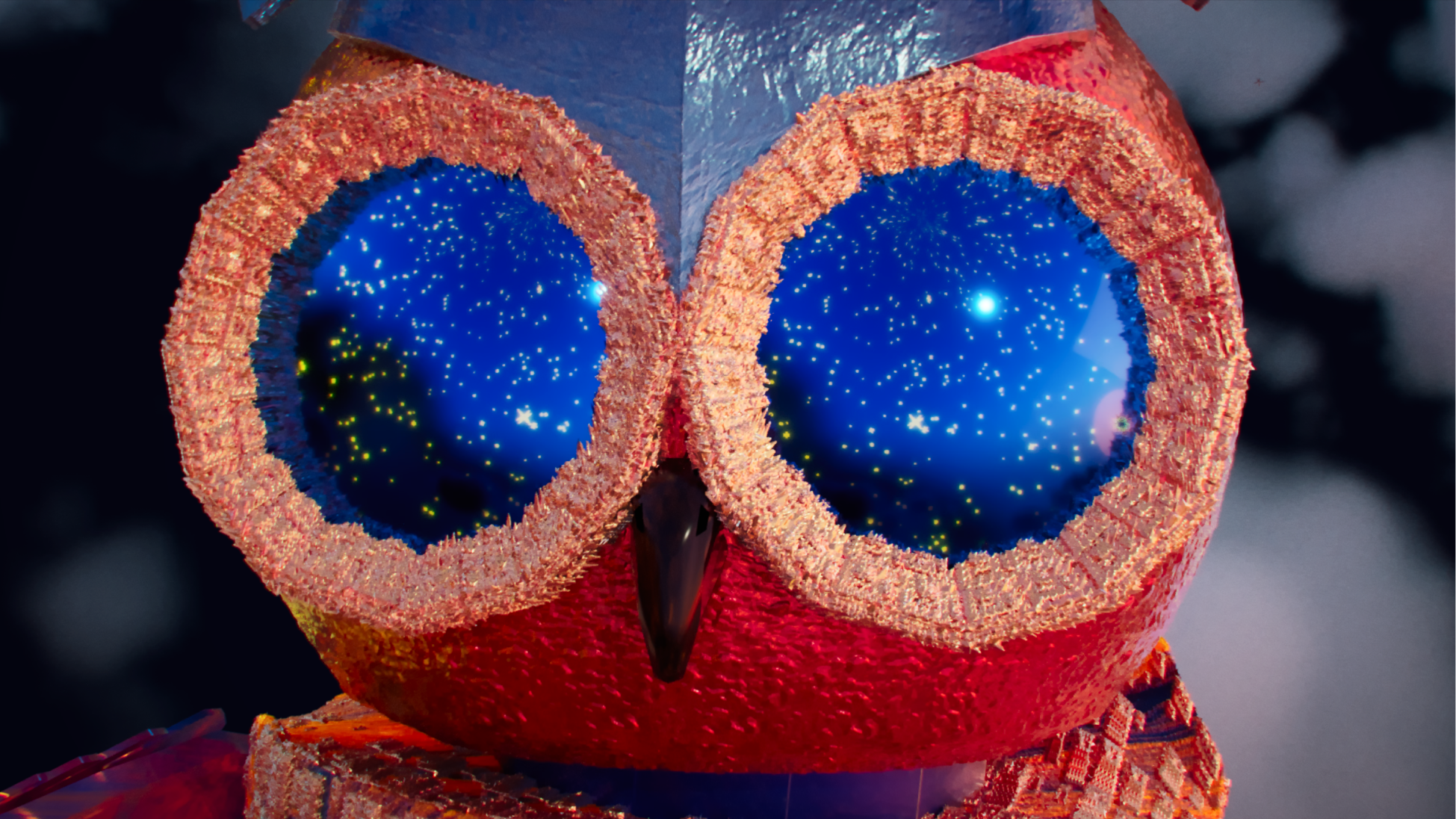
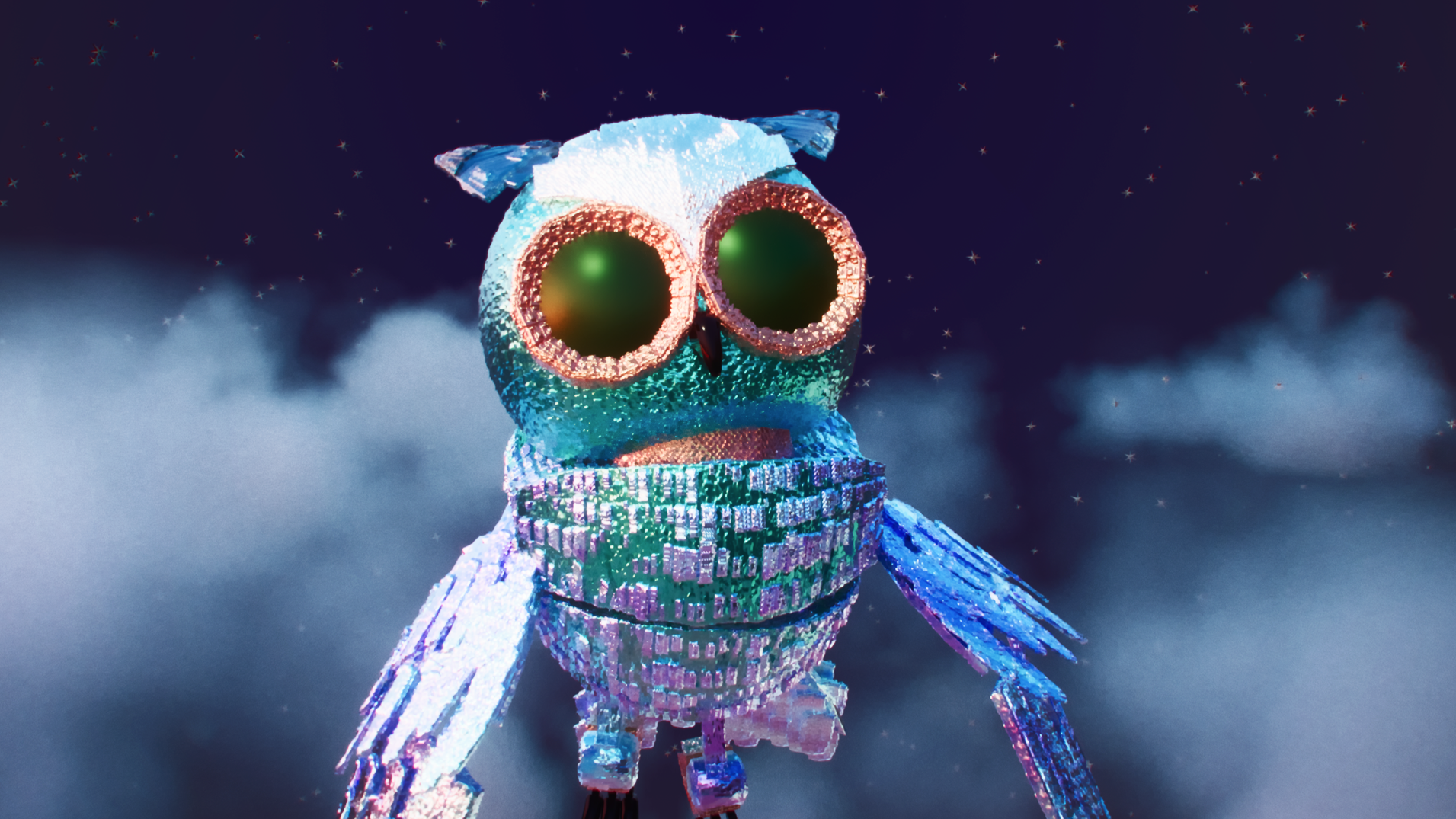
This project explored how procedural systems and performance direction can support character-driven storytelling. Starting from the phrase “the early bird catches the worm,” we developed a short study celebrating the quieter strengths of a night owl. The character, Knight, is responsible for lighting the stars each evening — revealing a dramatic transformation between his daytime presence and his nighttime capability.
Working with Eunie Hwang and Ray Xie, I directed our motion capture performer, Billy Healy-Melhuish, and led all motion cleanup and editing. The performance was shaped to create a clear physical distinction between Knight’s subdued daytime form and his empowered nighttime presence. I also designed and animated the camera to reinforce this transformation. All elements were built within a fully node-based procedural system, allowing flexible refinement of motion, timing, and staging.
TWO | Whiplashed
Exploring emotional tension through lighting and motion systems
Lighting Design · Cinematic Camera Blocking · 3D Text Asset Creation · Motion Capture Cleanup (Motive) · Procedural Motion Blending (Houdini) · Node-Based Look Development
-
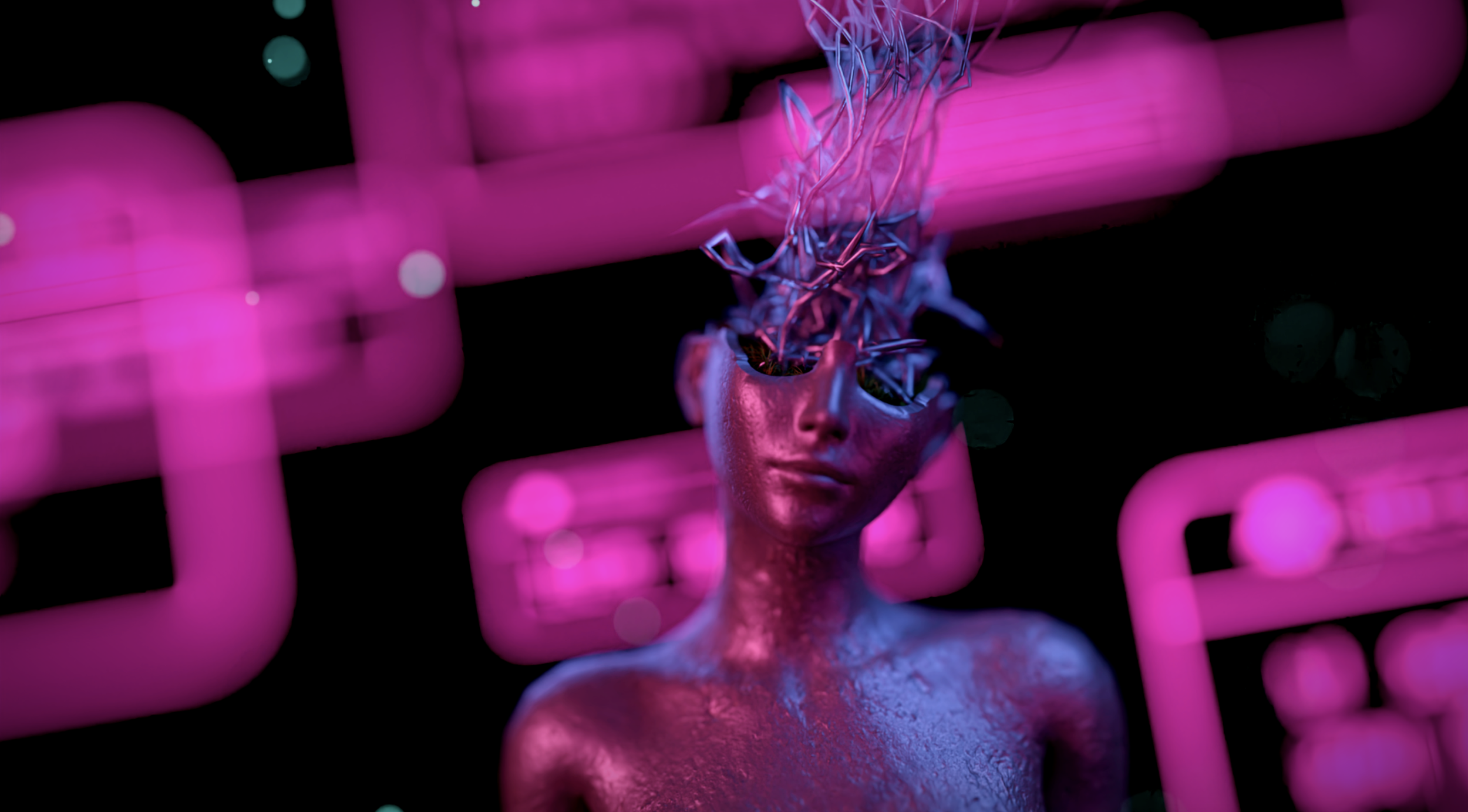
This project explored how procedural systems can support emotional storytelling. The central idea was cultural dislocation — visualized through a fragmented statue immersed in an environment of incoming messages from home. Rather than focusing on narrative completion, the goal was to experiment with lighting intensity, camera intimacy, and motion rhythm to evoke psychological pressure.
I collaborated with Eunie Hwang, who modeled and rigged the character, while I focused on motion, lighting, camera, and environment. We used motion capture performance; I cleaned the data in Motive and used Houdini to blend clips into a restrained but continuous sequence of instability. All systems were built node-based, allowing for procedural control over lighting, motion blending, and look development. Real text messages from our relocation experience were rebuilt as 3D neon geometry and staged within the environment.
THREE | Angel Butter
Procedural materials study exploring texture and pattern generation
Procedural Shading (VOPs) · Houdini Material Systems · Pattern Generation · Iterative Variation (TOPs) · Look Development
-
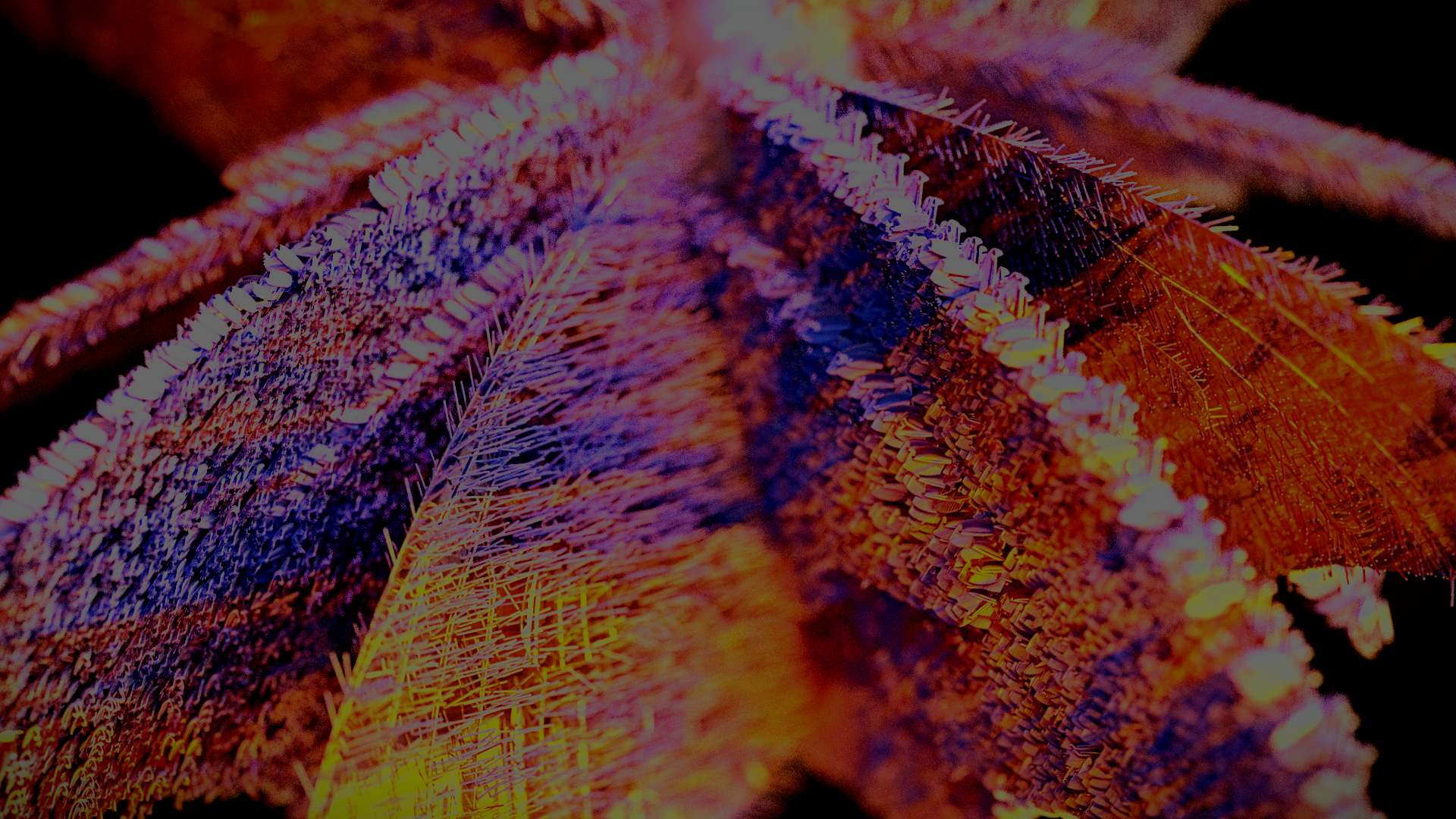
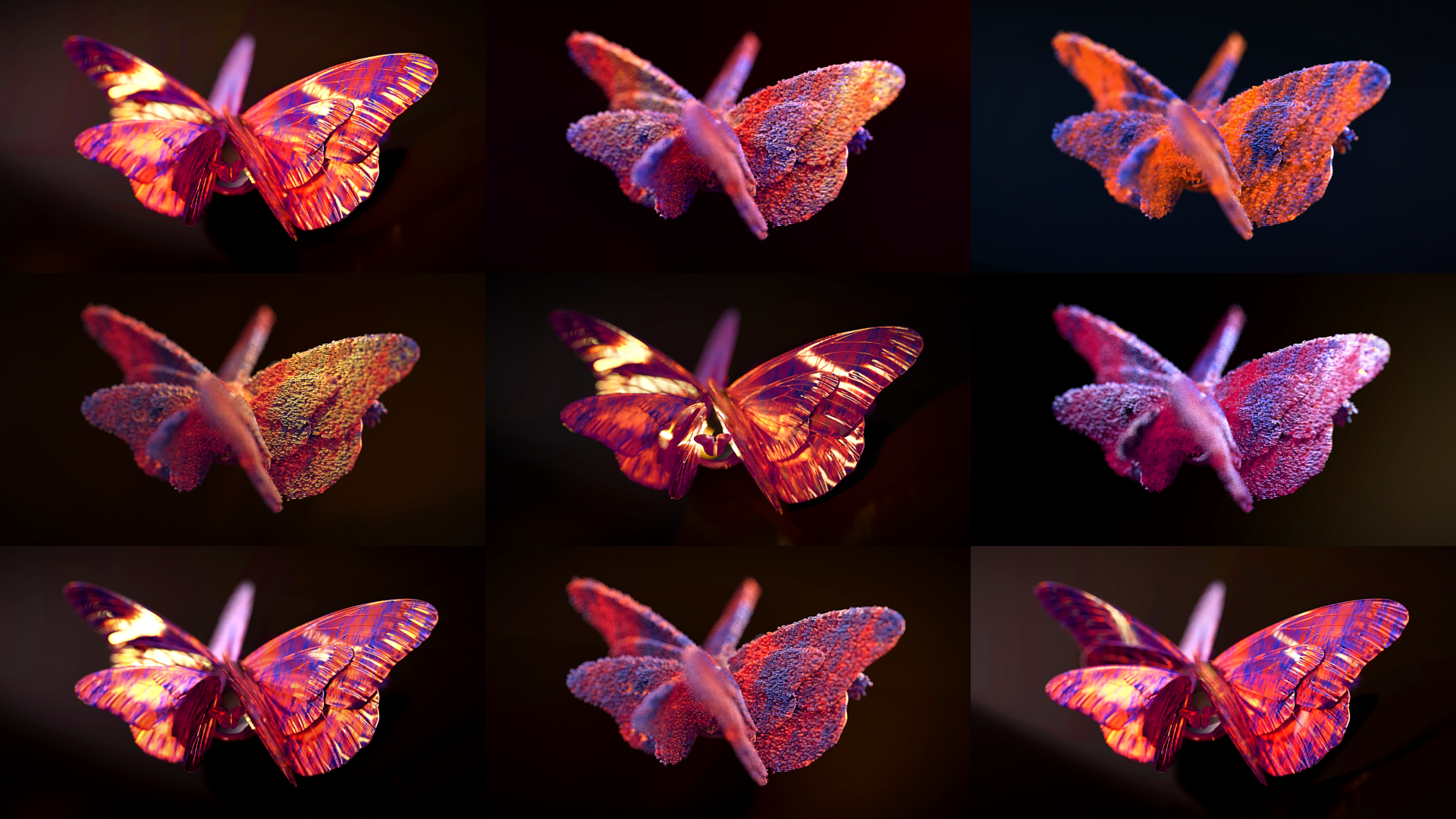
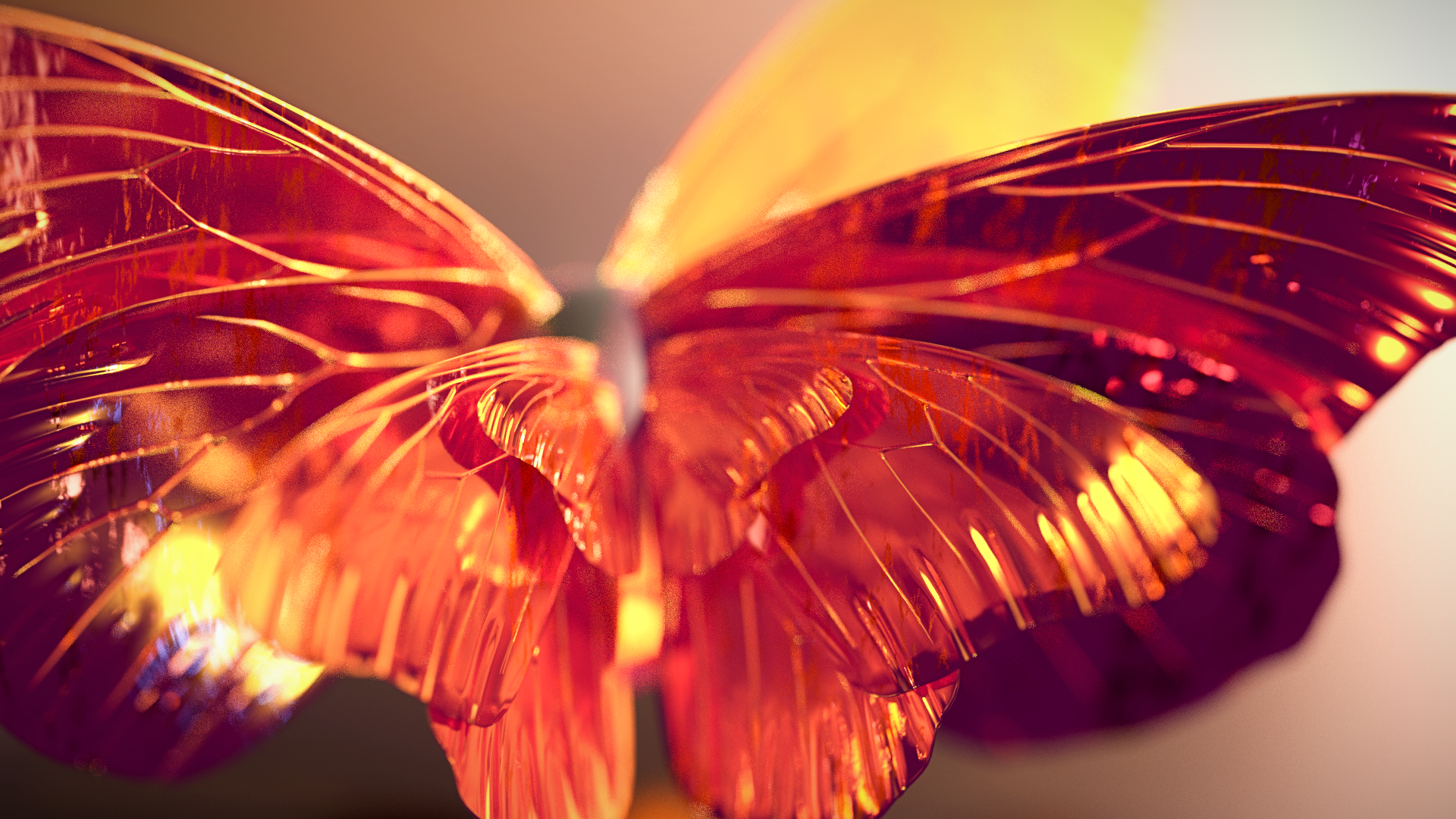
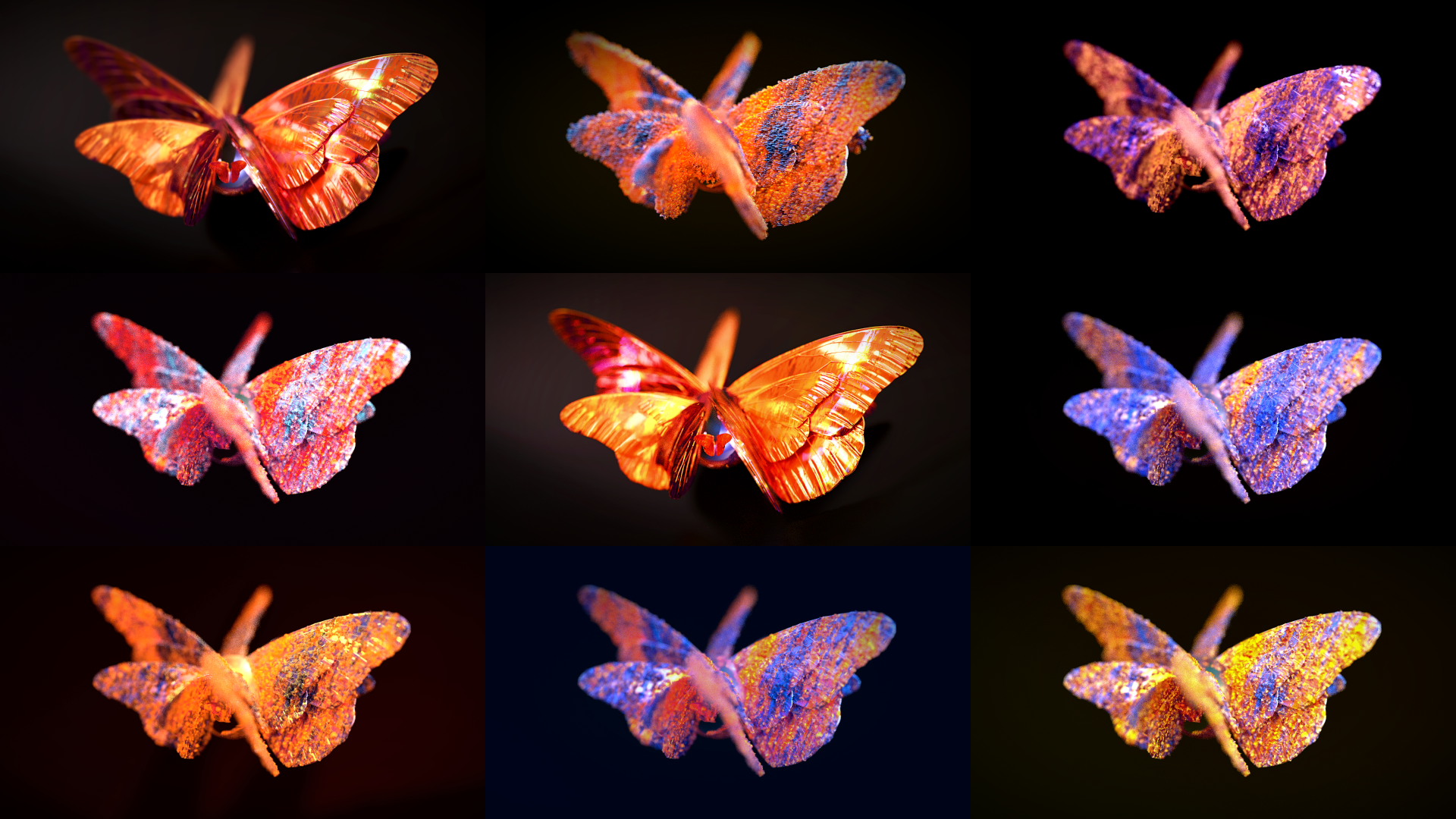
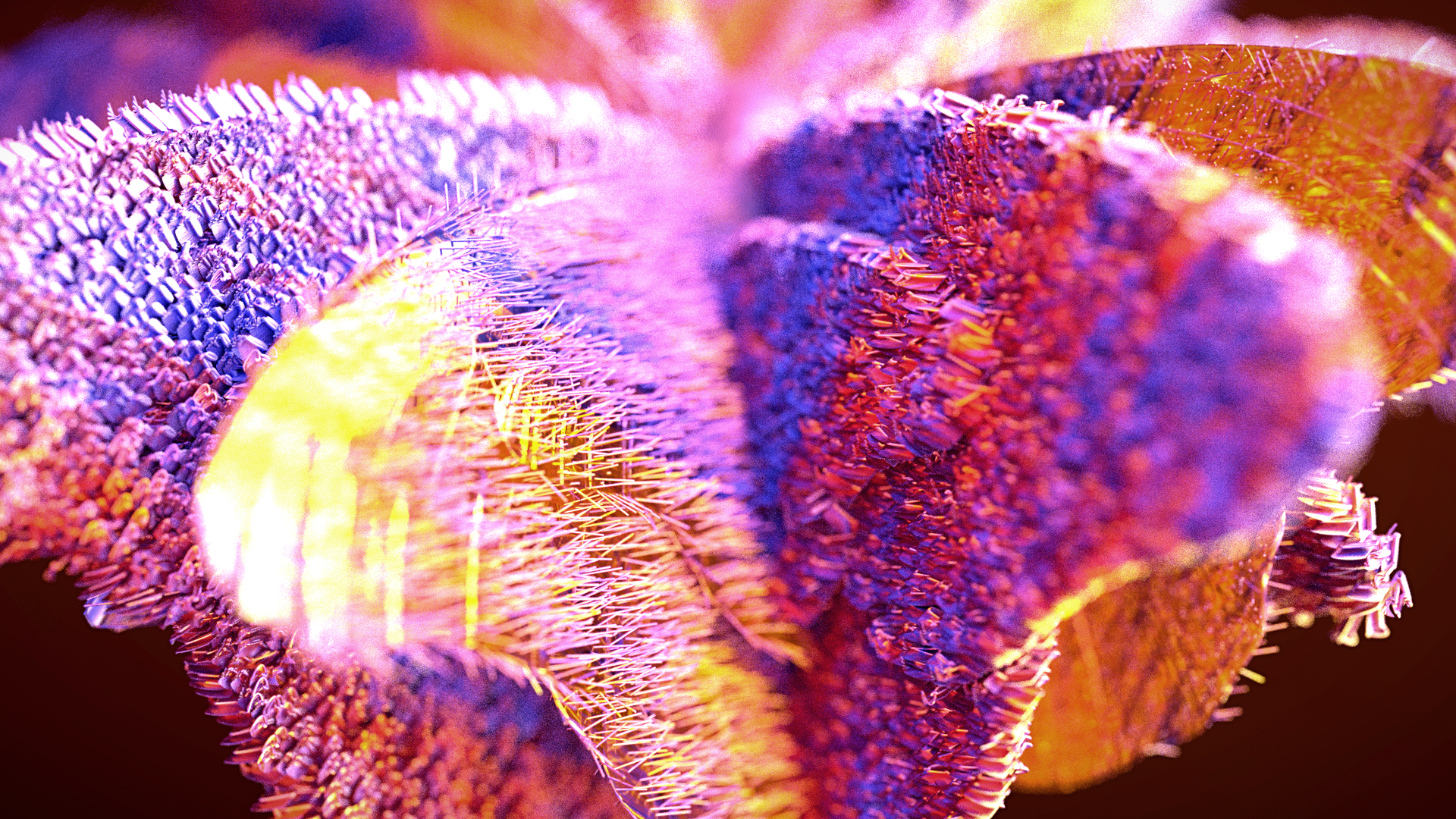
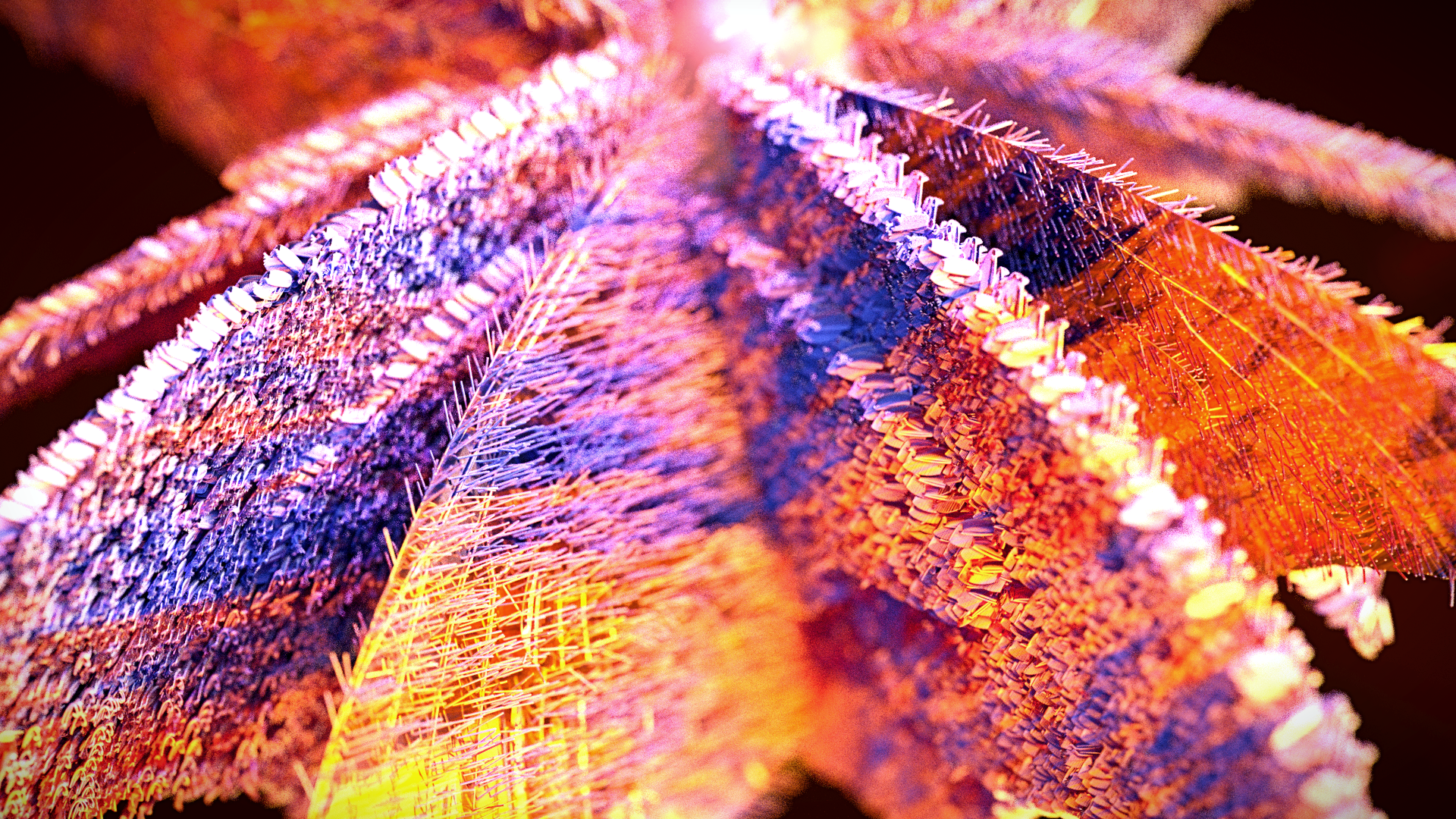
This project focused on building fully procedural materials inside Houdini FX. Inspired by the contrast in butterfly wings, which feel delicate and satin-like yet carry bold, vibrant patterns, I set out to reimagine their surface qualities through system-driven experimentation. The goal was to generate vibrant, controllable patterns while pairing them with unexpected material properties such as metallic finishes or rough textile surfaces.
All materials were built node-based using VOP networks inside Houdini. I constructed parameter-driven pattern systems and used procedural variation tools to rapidly generate and iterate through large sets of surface outcomes. The study focused on balancing structural control with aesthetic unpredictability. The breakdown includes shader networks and variation outputs, highlighting the speed and flexibility of procedural material workflows.
FOUR | MetaHuman BTS
Exploring real-time character workflows through Unreal Engine
MetaHuman Creation (3D Scan to Unreal) · Environment Population · Motion Editing · Lighting Design · Cinematic Camera Design · Real-Time Rendering (Unreal Engine)
-
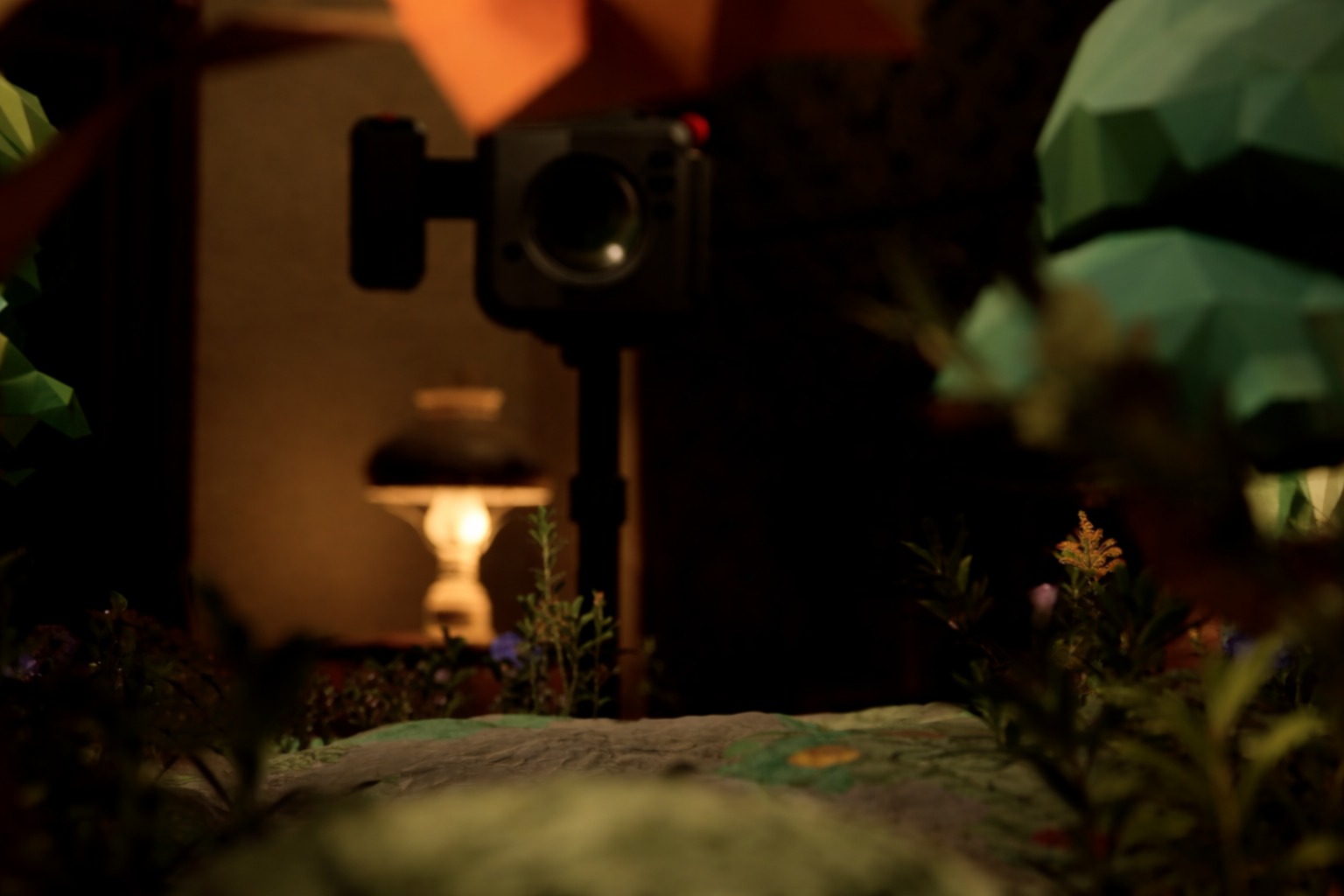
This project explored the practical workflow of building and directing a MetaHuman inside Unreal Engine. Framed as a behind-the-scenes concept, it imagines a digital version of myself creating a stop-motion film. The intent was to experiment with real-time character setup, lighting control, and cinematic camera work within a contained environment.
I created the MetaHuman from a 3D scan and completed all scene assembly inside Unreal. My responsibilities included populating the environment, designing lighting, building camera sequences, and editing motion performance in-engine. Mason Garner modeled the miniature character Turnip, Ray Xie sourced supporting assets, and Eunie Hwang handled FX. Motion performance was captured by Mason and Eunie and refined through my editing process.
FIVE | Grief Luminaries
Exploring HDAs and procedural variation through symbolic object design
Houdini Digital Assets · Procedural Modeling · Chain System HDA · Lantern Generator HDA · Particle Simulation · TOPs Variation Workflow · Environment Integration
-
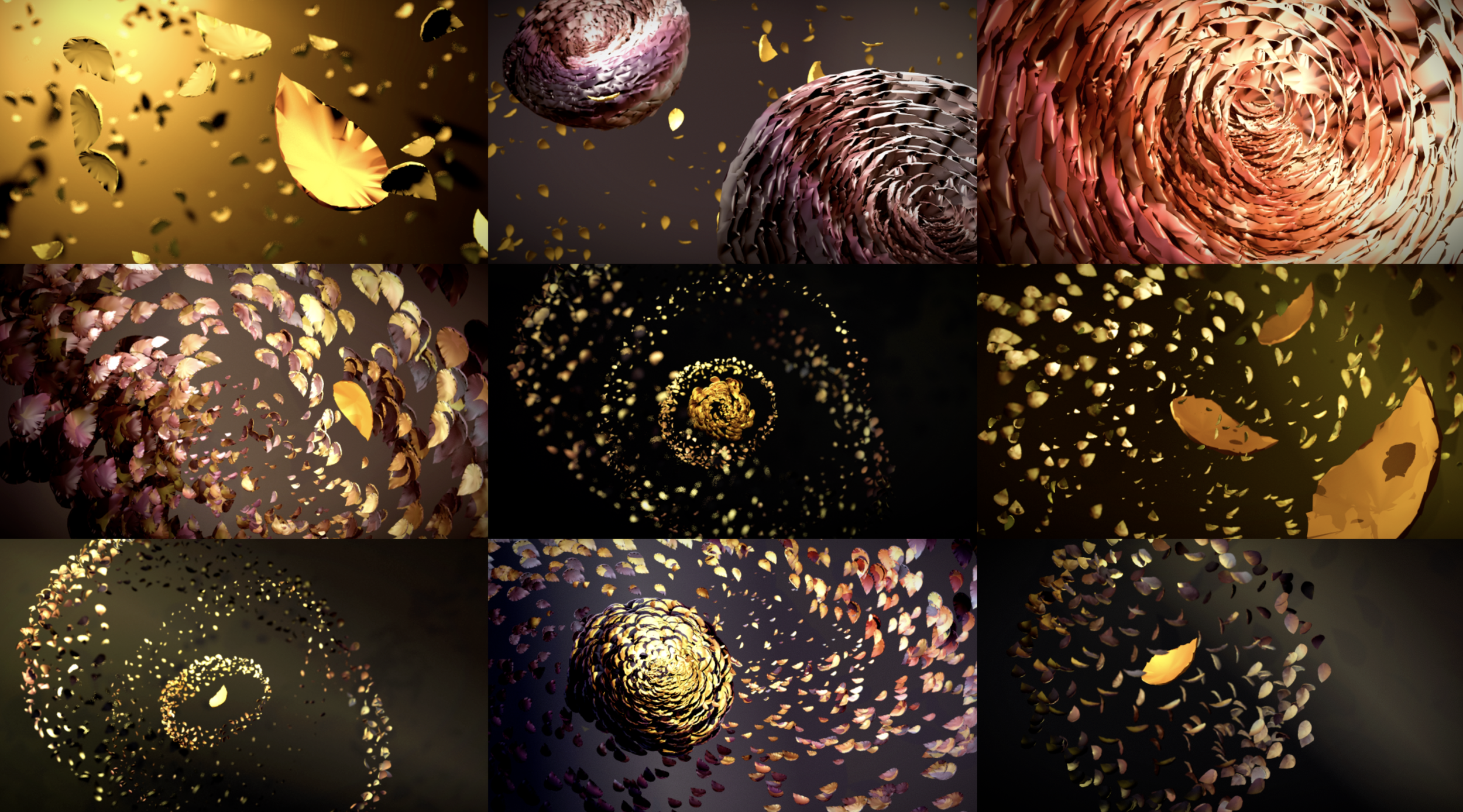
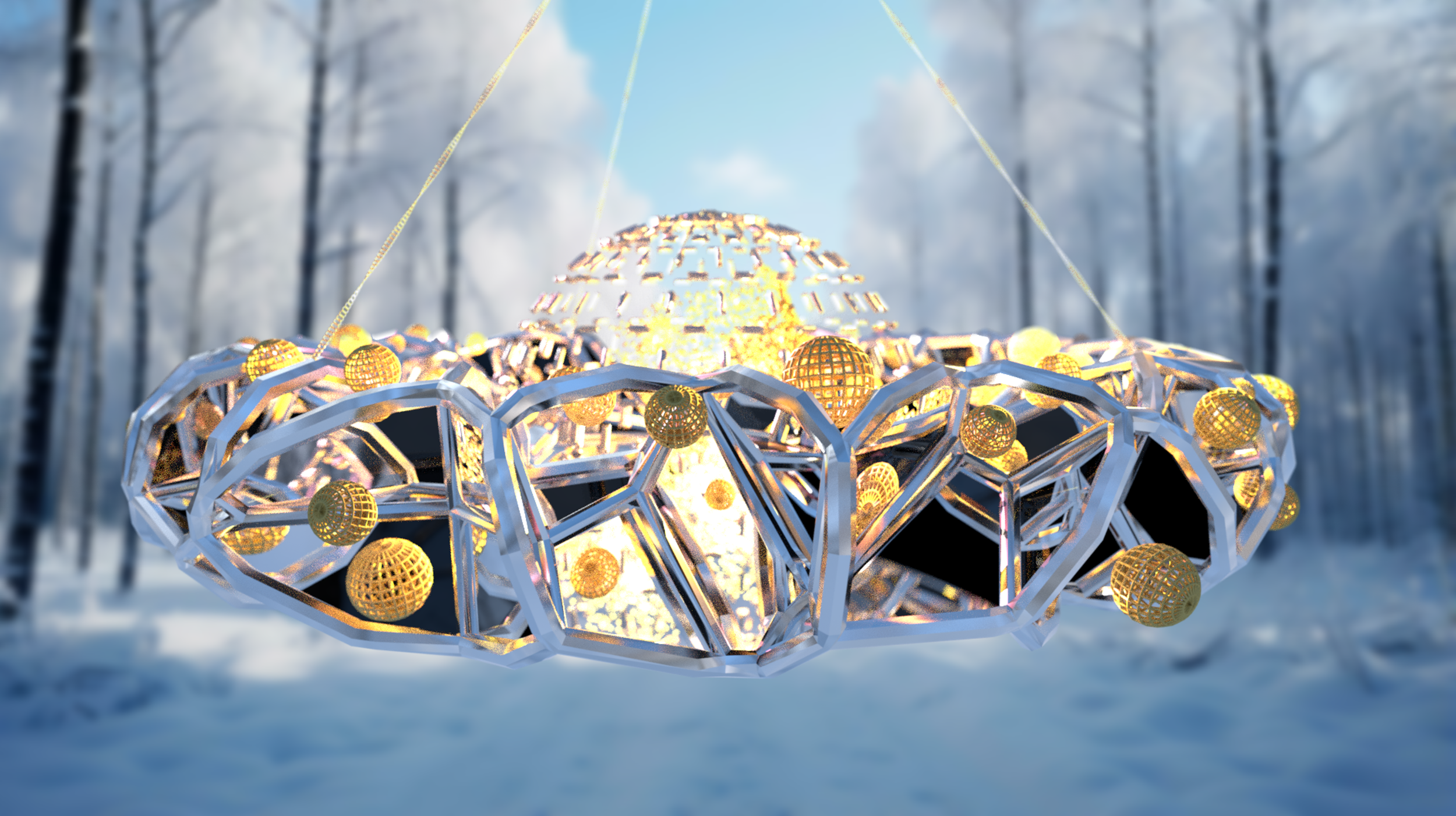
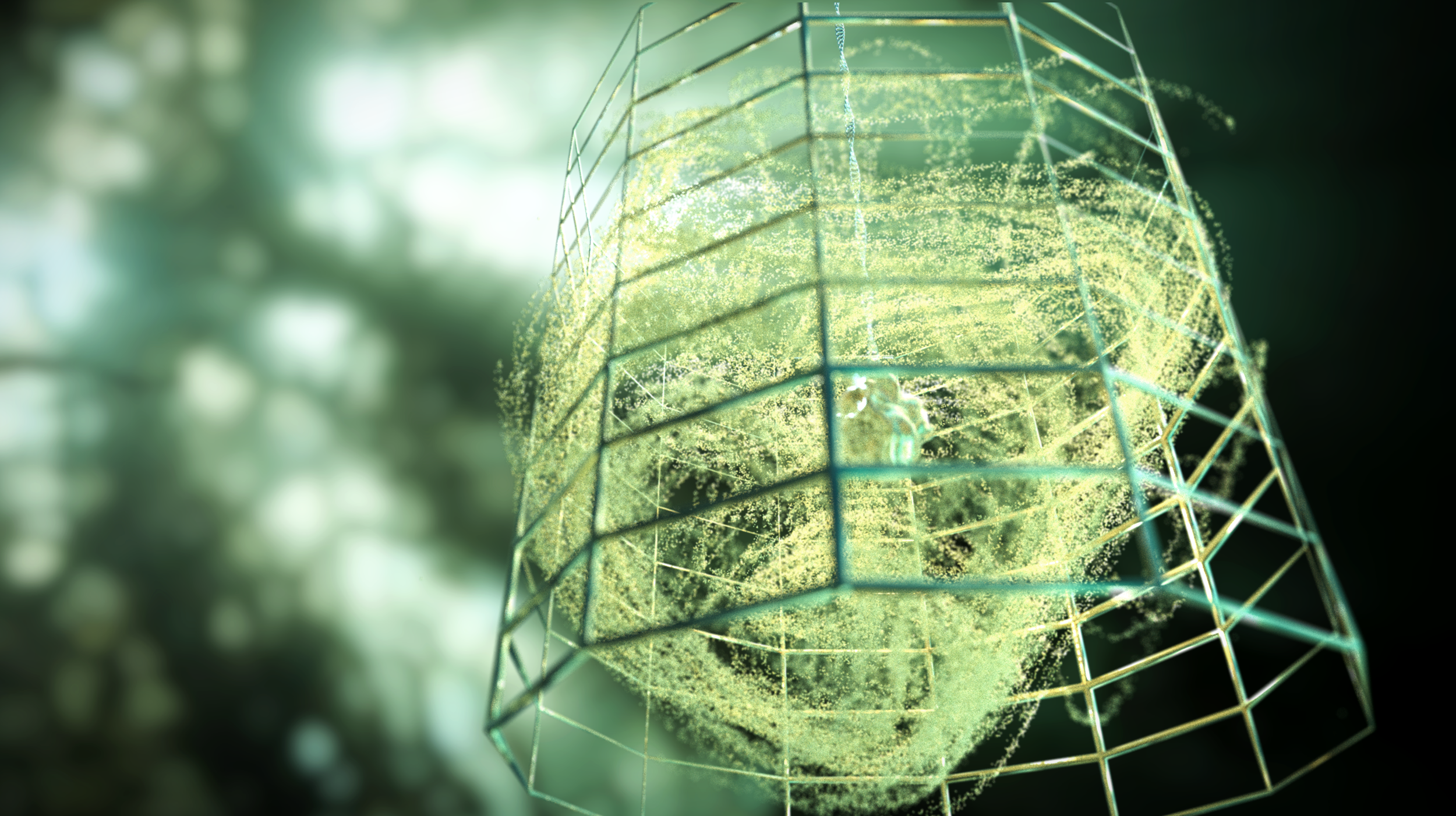
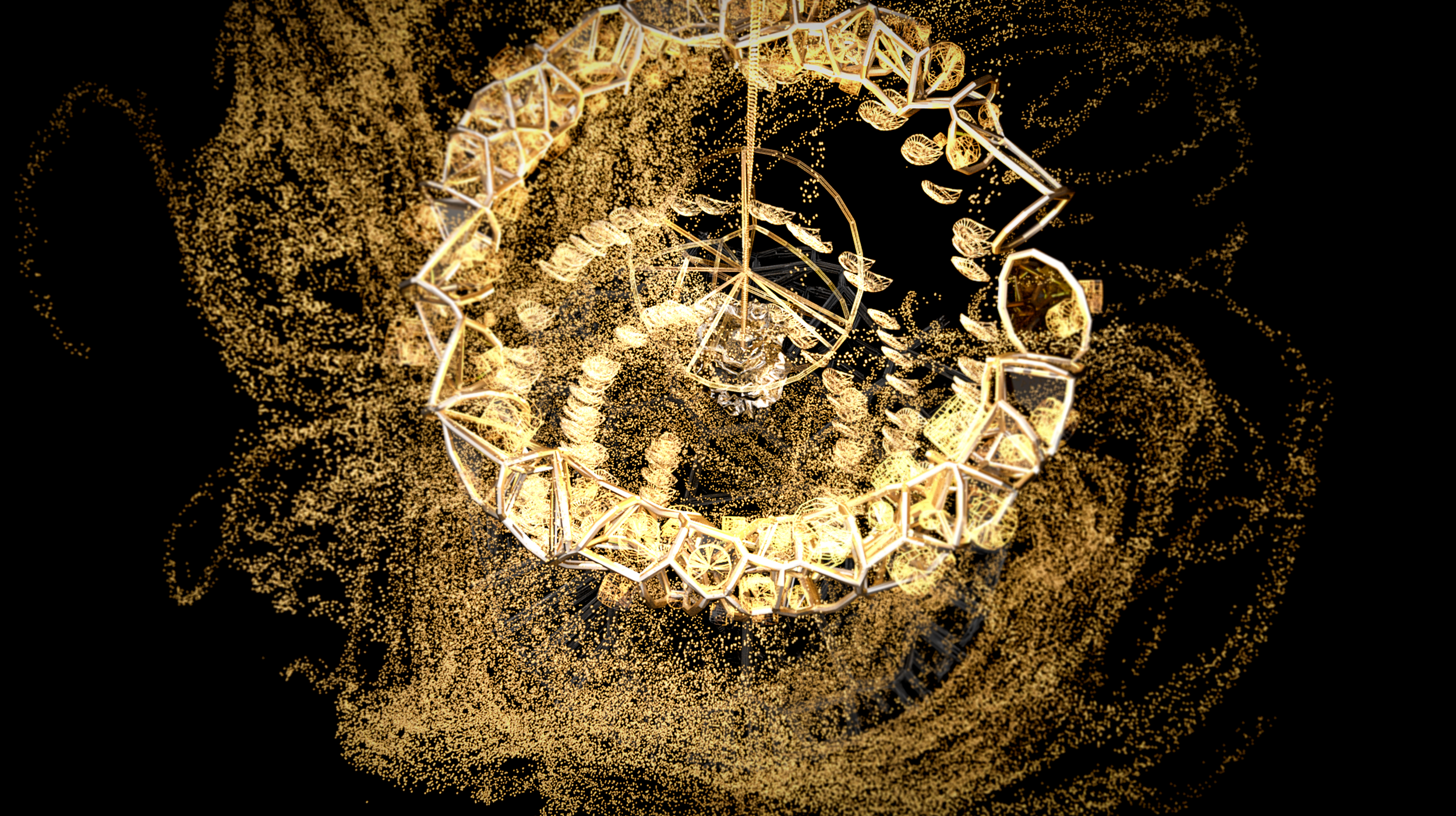
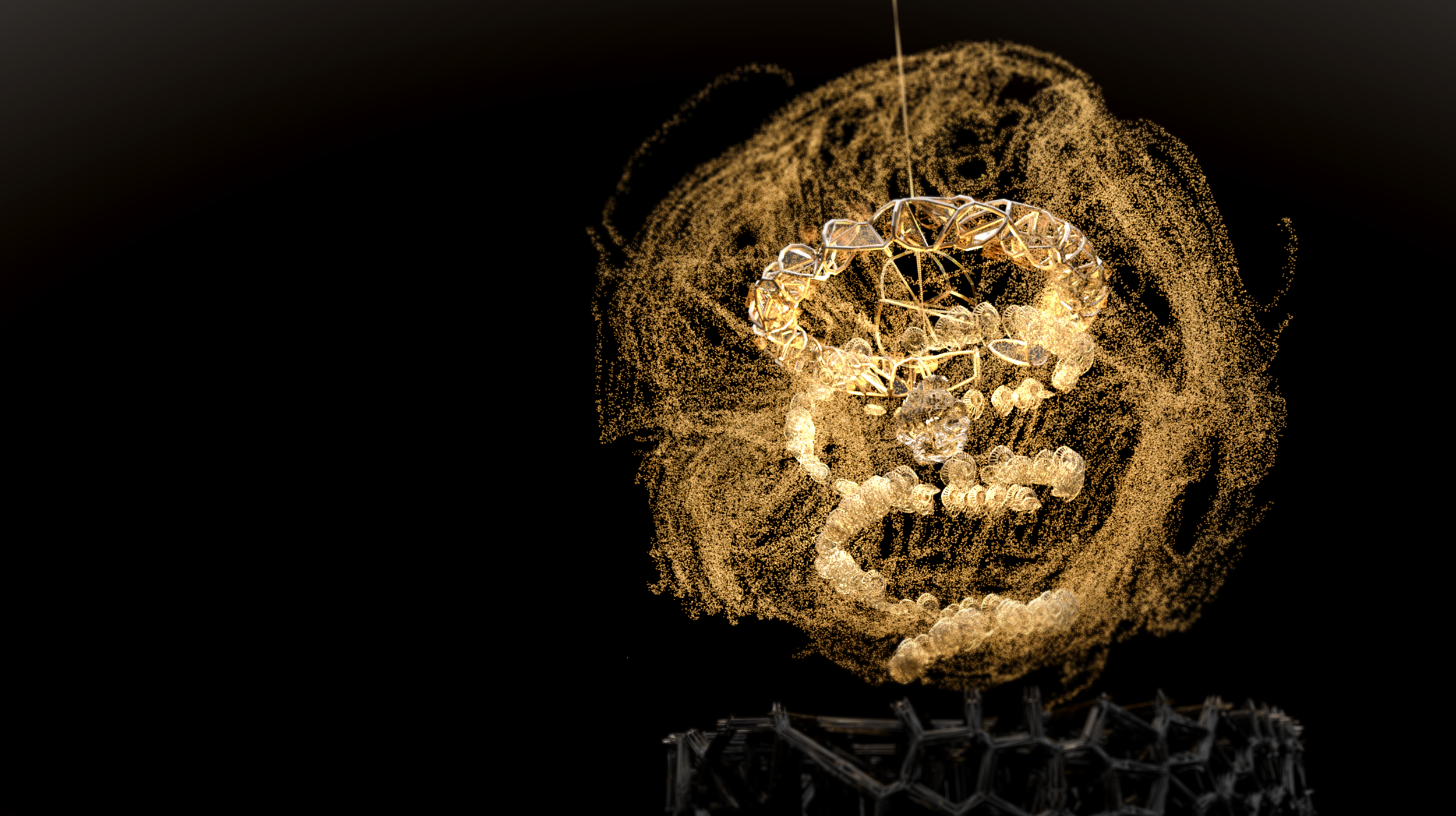
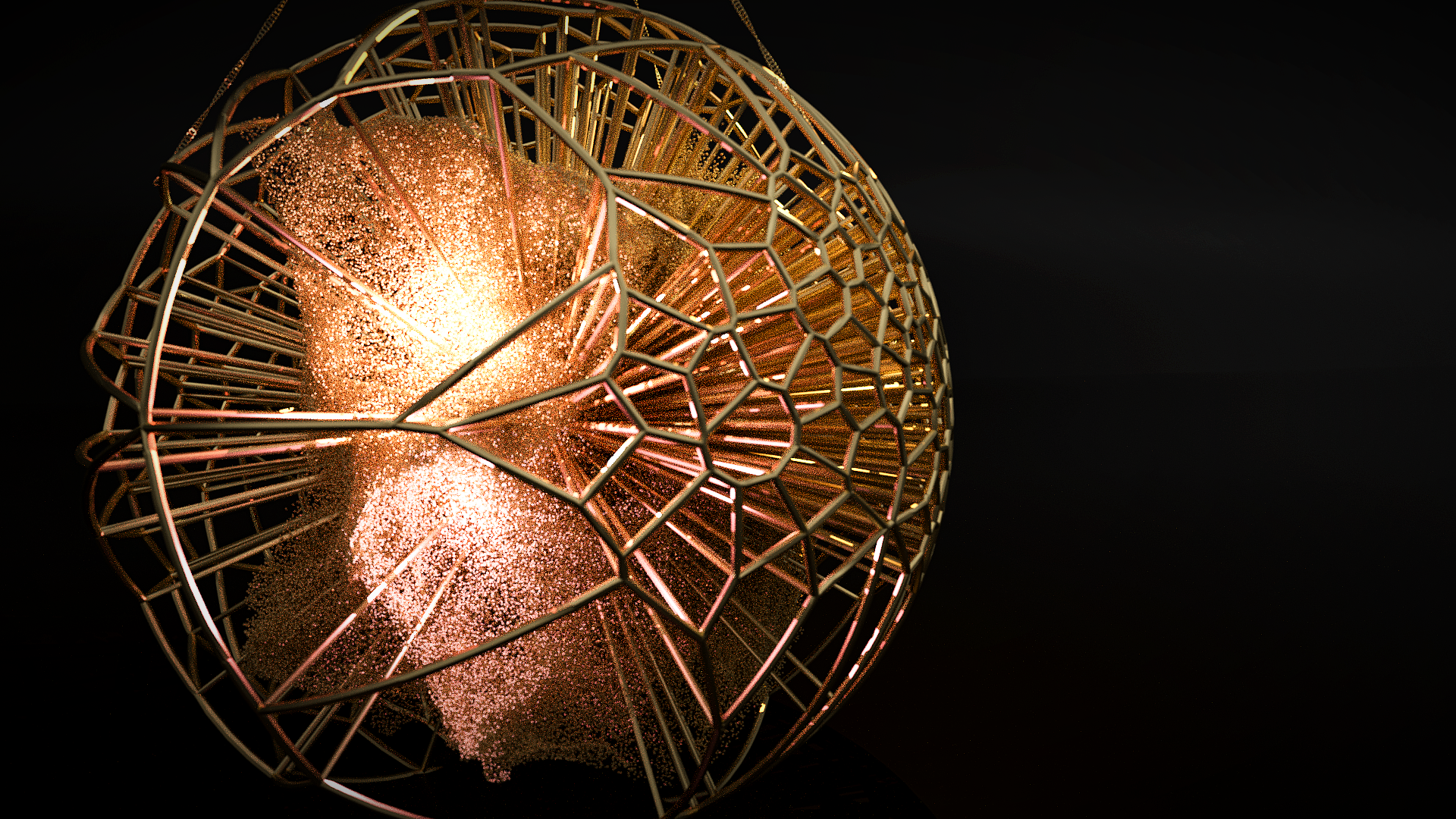
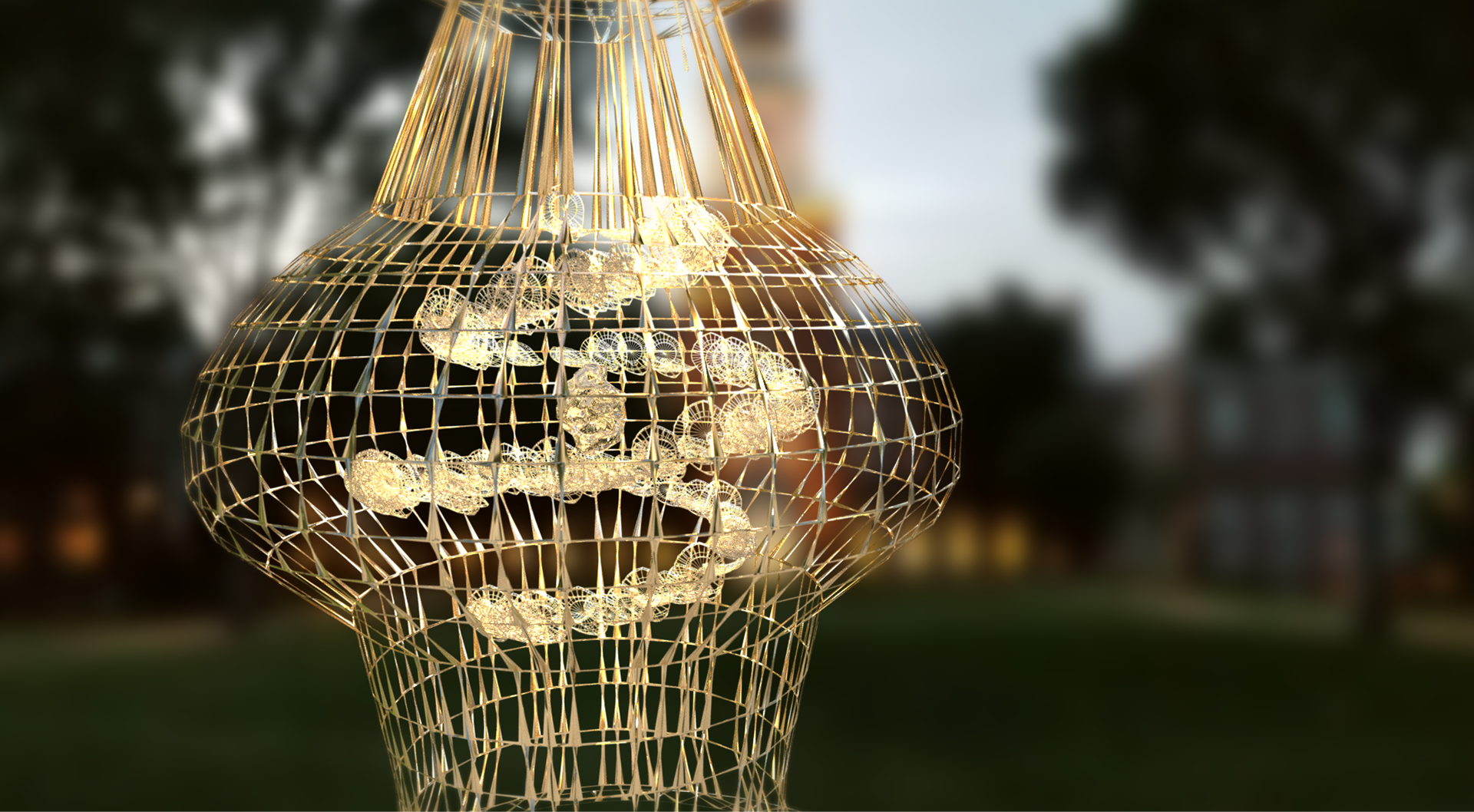
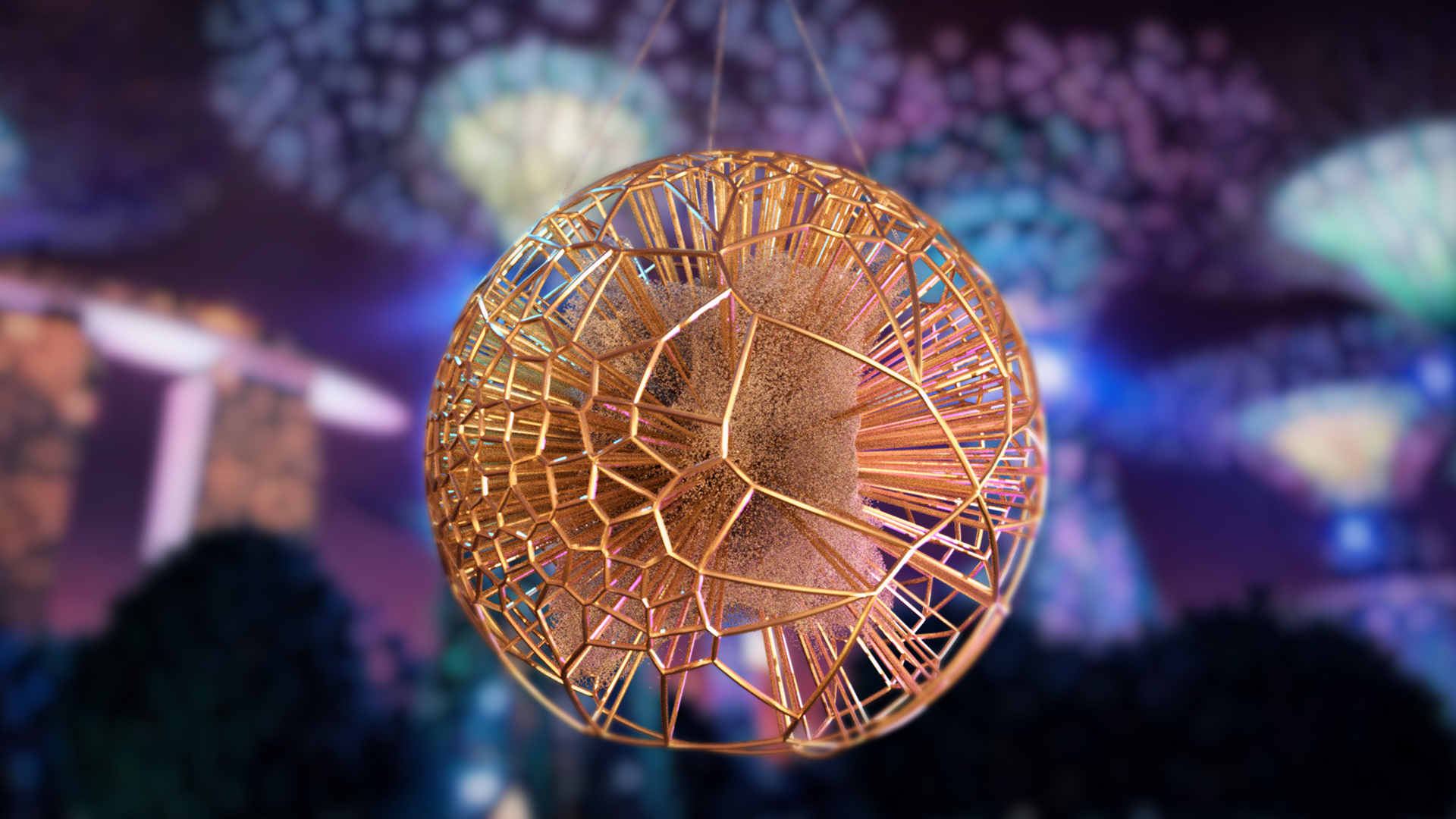
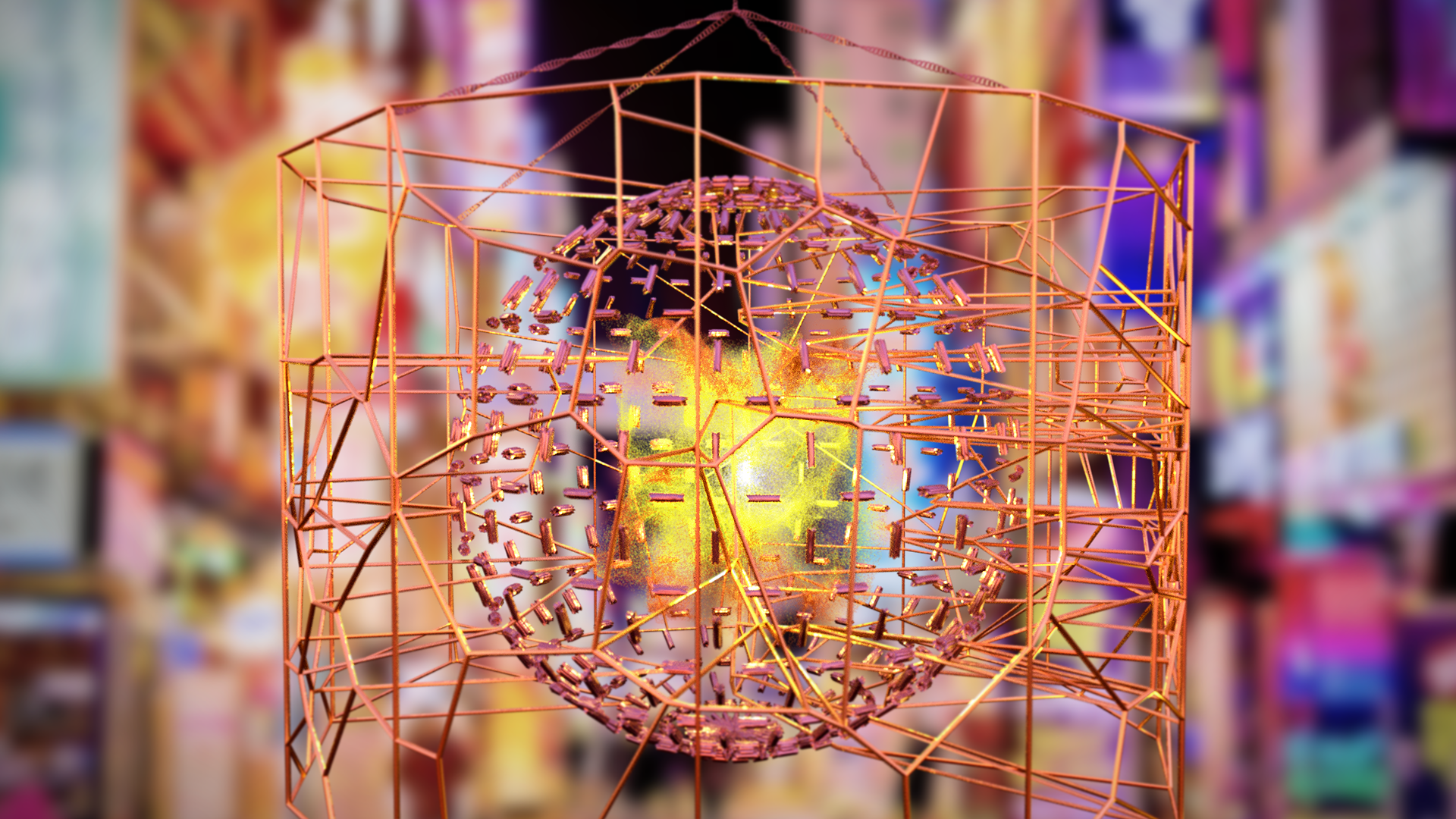
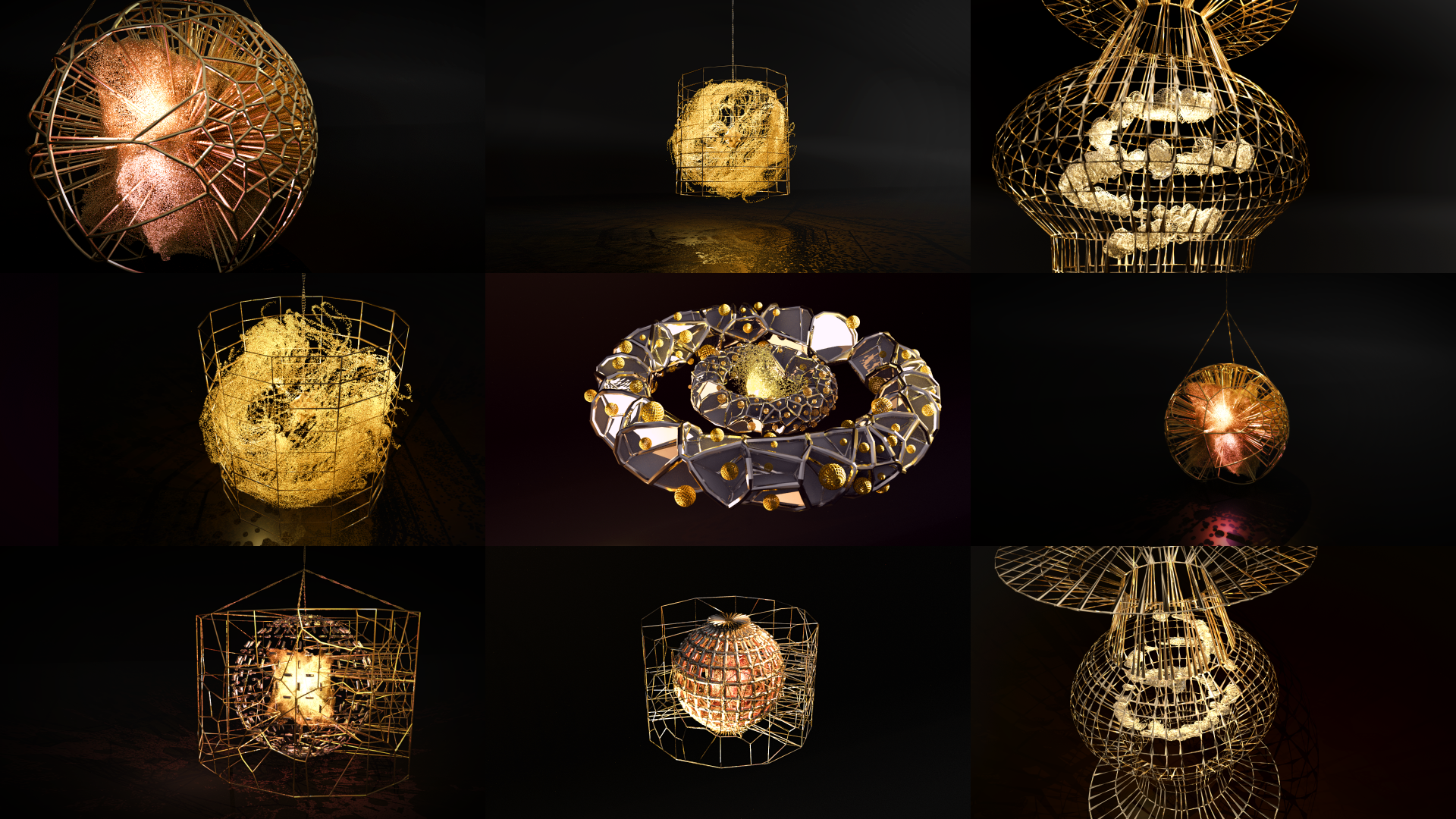
Grief Luminaries started from a simple question. If we think of coping mechanisms or guiding tools as sources of light, what might those look like as physical forms. Rather than sculpting a single object, I focused on designing a procedural system that could generate many lanterns, each with its own structural identity. The goal was to let variation reflect the idea that different people and different chapters call for different forms of light.
I built two separate HDAs in Houdini. One generated the lantern structures themselves, and the other produced the delicate chain systems connecting them. Particle simulations were integrated into the lantern interiors to create dynamic light behavior. Using TOPs, I rapidly generated multiple lantern variations, adjusting structure and shape. I then placed selected variations into different landscapes such as underwater and winter environments to test context and atmosphere. The breakdown highlights HDA construction, variation systems, and environmental staging.
SIX | Cobby the Carrot Monster
Translating a child's illustration into a real-time digital puppet
Character Rigging · Unreal Engine Blueprint Integration · Puppet Systems · Real-Time Character Setup · Interactive Animation Workflow
-
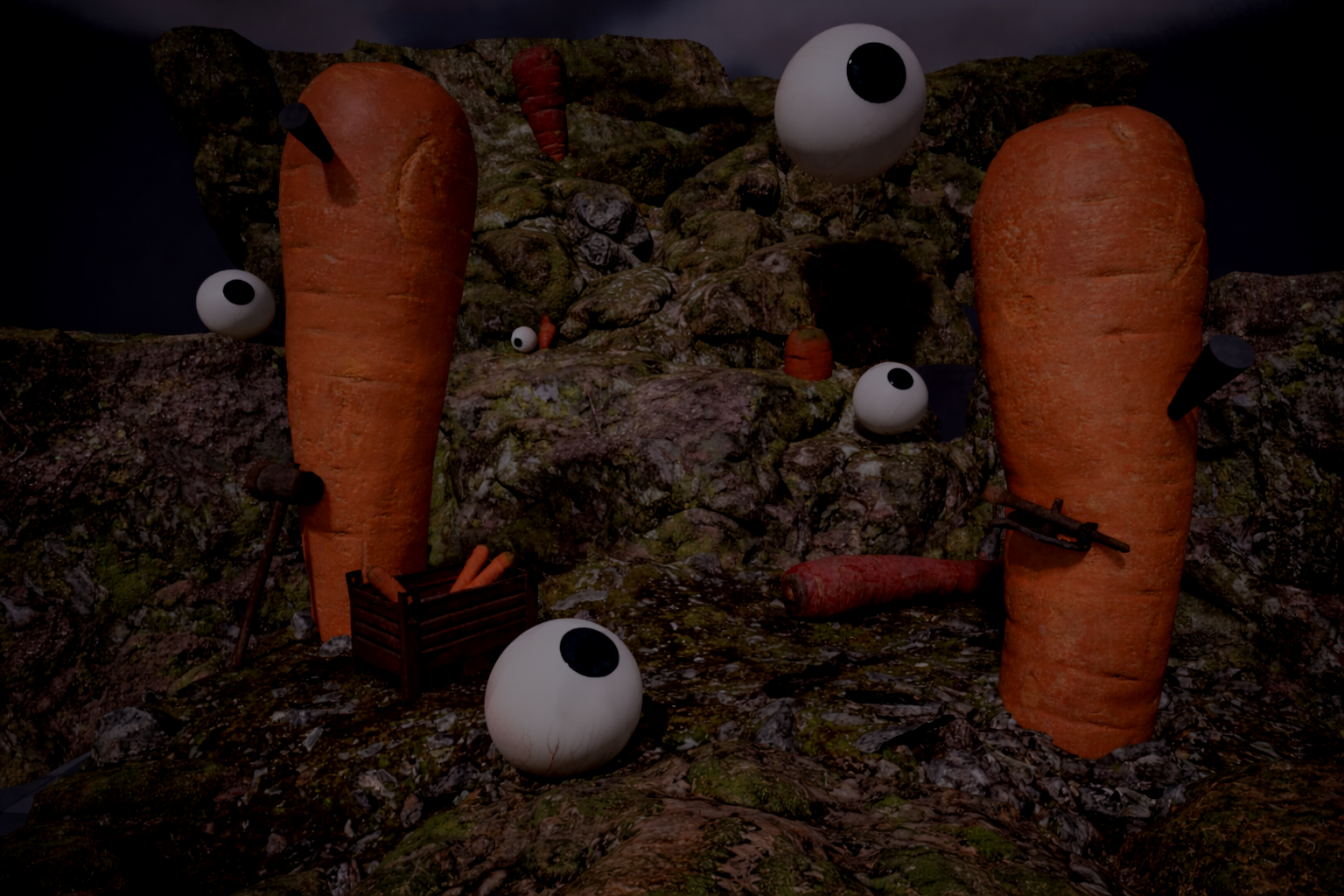
This project began with a drawing by our lecturer’s six-year-old child. The challenge was to translate the hand-drawn monster into a simple, functioning digital puppet while preserving its charm and exaggeration. We named the creature Cobby the Carrot Monster — a playful fable character who “encourages” children to eat their carrots.
I collaborated with Eunie Hwang, who modeled and textured Cobby and built the environment in Unreal Engine. I was responsible for rigging the character and implementing simple motion systems within Unreal, connecting the rig to interactive controls and performance triggers. The focus was on clarity and responsiveness rather than complexity. The project expanded my understanding of Unreal beyond VFX and cinematic sequencing, highlighting real-time character systems and playful audience engagement. The final presentation included a song created by Xami, reinforcing the collaborative spirit behind the piece.
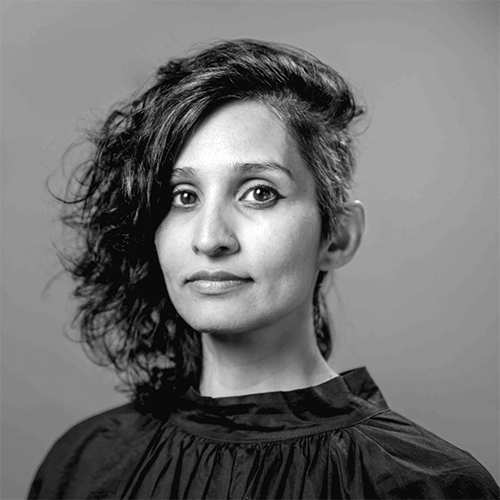
“What you realize when you meet Nadia and work with her over time is that her real power is her emotional quotient. She is able to understand what conditions artists need to do their best work and then sets about creating and protecting those conditions. I feel like if Nadia was a character on Star Trek The Next Generation, she would be Lieutenant Commander Troi. Just really empathetic but also methodical and capable.”
Raqi Syed, Program Director at Miramar Creative Center